Photo: Berthold Werner, CC BY-SA 4.0

Camino Portugués: from Lisbon to Santiago via Porto and Tui, stage by stage
The Camino Portugués, the Portuguese Camino, runs up Portugal from south to north: from Lisbon cathedral along the banks of the Tagus, then through Santarém, Tomar and Coimbra to Porto, across the Minho at Tui and on through Galicia by way of Pontevedra and Padrón.
- Classic start
- Lisbon
- How long
- 622 km, about 39 days at 16 km a day
- Difficulty
- Moderate, 6,529 m of ascent
Camino Portugués elevation profile: Tagus plain, central hills, Minho and Galicia
The elevation profile, computed along the route from the Copernicus European terrain model, is that of a route through hills, without a single pass.
Hover over a stage to read it, click to open it on the map.
- Easy
- Moderate
- Hard
- Very hard
- Tagus plain, from Lisbon to Golegã (stages 1 to 5): dykes and farm roads a few metres above the river; the one step up is the Santarém plateau, about a hundred metres higher, climbed on the fourth stage for a little over 100 m of elevation gain.
- Central hills, from Golegã to Coimbra (stages 6 to 10): after Tomar, the route enters the limestone hills of central Portugal; between Alvaiázere and Ansião it reaches its highest point, 467 m, before dropping to Coimbra and the Mondego.
- From Coimbra to Porto (stages 11 to 16): low valleys and plateaus, seldom above 300 m.
- Minho and Galicia, from Porto to Santiago (stages 17 to 27): the Portuguese Minho is hillier, and the climb to the Alto da Portela Grande, at around 400 m after Ponte de Lima, is the steepest of the route; from Tui to Santiago, the Galician hills stay below 260 m, with a final climb to the cathedral, above 250 m.
Read more
Of the four routes measured on this site, the Portugués has the lowest high point: 467 m, against 707 m on the Camino del Norte, 1,132 m on the Primitivo and 1,507 m on the Francés. Its cumulative elevation gain, 6,529 m over close to 622 km, is also the smallest, ahead of the 7,001 m of the Primitivo, a route half as long.
How many days for the Camino Portugués: one week from Tui, two from Porto, four from Lisbon
The Camino Portugués splits into three sections. Lisbon to Porto, 16 stages: long days for the most part, plenty of tarmac, few albergues.
From Porto, pick your route before fixing the stages
The planner follows the Central Route, through Barcelos and Ponte de Lima. The Coastal Route, which hugs the ocean as far as Redondela, adds around thirty kilometres and two more stages according to the guides: if you choose it, allow thirteen days rather than eleven from Porto, and check the timetable of the Caminha ferry.
Leaving Lisbon: altered route, Alpriate stop uncertain
Since 2024, walkers have reported new waymarking that follows the bank of the Tagus after the Vasco da Gama bridge and no longer passes through the village of Alpriate, where the albergue of the Via Lusitana association was advertised as open from April to mid-October; as of 25 October 2026, the list of accommodation published by the association on vialusitana.org no longer mentions it. The first stage in the table keeps this historical breakdown: before counting on that stop, ask the association or plan to sleep in Alverca or Vila Franca de Xira.
Golegã during the horse fair
From 6 to 15 November 2026, the Feira Nacional do Cavalo draws huge crowds to Golegã, a town of a few thousand inhabitants where the fifth stage ends; beds there are impossible to find or overpriced on those dates. Sleep before, in Santarém, or push on to Tomar. Dates published by Visit Portugal (visitportugal.com), to be checked again before you leave.
Read more
Porto to Tui, 5 stages, crosses the Portuguese Minho, its vineyards and its small towns with medieval bridges. Tui to Santiago, 6 stages in Galicia, is where walkers from the Central and Coastal routes converge, and where accommodation is most plentiful. Enter your available days and your pace; the planner suggests the starting point that gets you to Santiago in the time you have, with a day-by-day breakdown.
The most common starting points match round durations: one week from Tui, two from Porto, a little under four from Lisbon. If you want the Compostela, tick the option: any start less than 100 km from Santiago is ruled out, and Tui, just under 120 km away, remains the usual start for earning it. The selected section is highlighted on the map.
Portuguese Camino stages from Lisbon to Santiago
The table follows a 27-stage breakdown, with the distance, the elevation gain, the estimated walking time and the town at the end. Distances and elevation are measured on the OpenStreetMap route; times follow the Swiss hiking method, breaks excluded. Stages 17 to 27 correspond to a start from Porto, stages 22 to 27 to a start from Tui.
Between Lisbon and Coimbra, several stages exceed 30 km for want of accommodation in between; from Porto to Santiago, days run from 16 to 34 km and most villages have albergues, so you can lengthen or shorten a day. For the Compostela, remember the two daily stamps from Tui onwards, over the last 100 km.

What to see on the Camino Portugués, from Lisbon to Padrón
The places below appear on the map and in the stage table, with the distance left to Santiago.
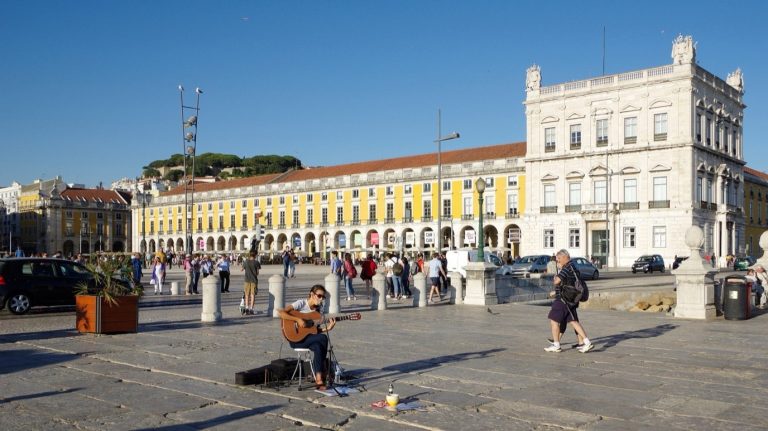
Photo: Berthold Werner, CC BY-SA 4.0The route starts at the cathedral (Sé), in the Alfama, and follows the Tagus northwards; the credencial is issued at the Sé or at the pilgrims’ office of the Via Lusitana association, in the church of Conceição Velha.
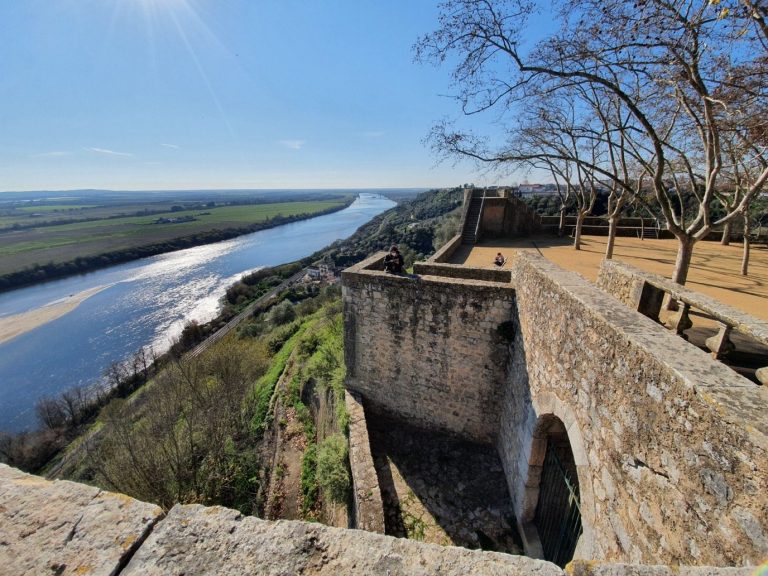
Photo: GualdimG, CC BY-SA 4.0Santarém
Hilltop town on the right bank of the Tagus, taken from the Moors in 1147 by Afonso Henriques, first king of Portugal; the Portas do Sol viewpoint above the river and the largest and most varied group of Gothic churches in the country, including the church of Graça.
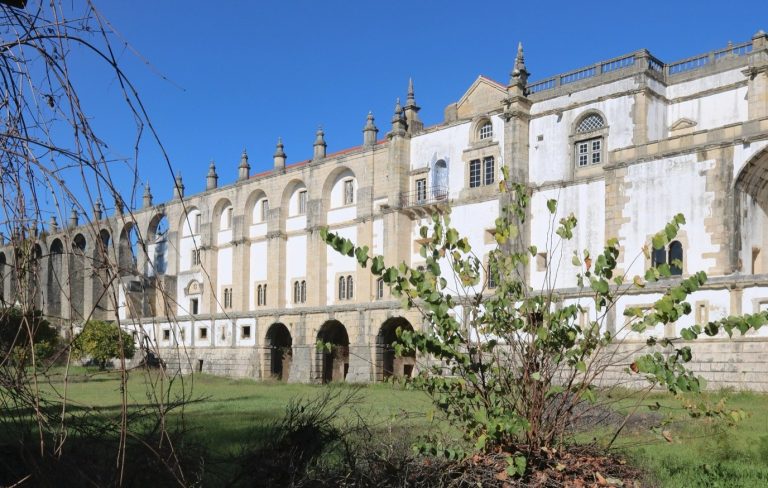
Photo: Ingo Mehling, CC BY-SA 4.0Tomar
The Convent of Christ, a castle founded by the Templars in 1118 and later seat of the Order of Christ created in 1319, dominates the town; its charola, a 12th-century rotunda inspired by the sanctuaries of Jerusalem, has been on the World Heritage list since 1983.
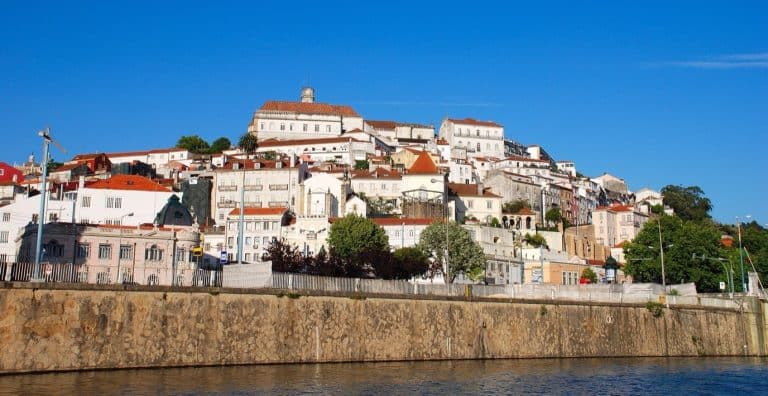
Photo: Anabela Maximiliano [2], CC BY 2.0Coimbra
A university founded in Lisbon in 1290 and settled for good in Coimbra in 1537, World Heritage since 2013, with the Joanina Library opened in 1717; Queen Isabel, known as the Rainha Santa, who made the pilgrimage around 1325 after the death of her husband King Dinis, rests in the monastery of Santa Clara-a-Nova.
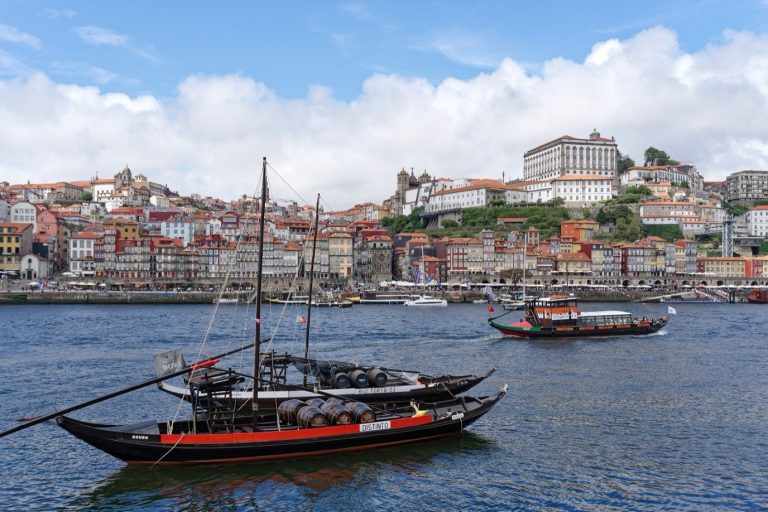
Photo: Jakub Hałun, CC BY 4.0Porto
One of the most chosen starting points on the Camino Portugués in the provisional 2025 figures, where the Central and Coastal routes part; the credencial is issued at the cathedral (Sé) shop or at the tourist office next door; historic centre on the World Heritage list since 1996, Dom Luís I bridge of 1886 over the Douro.
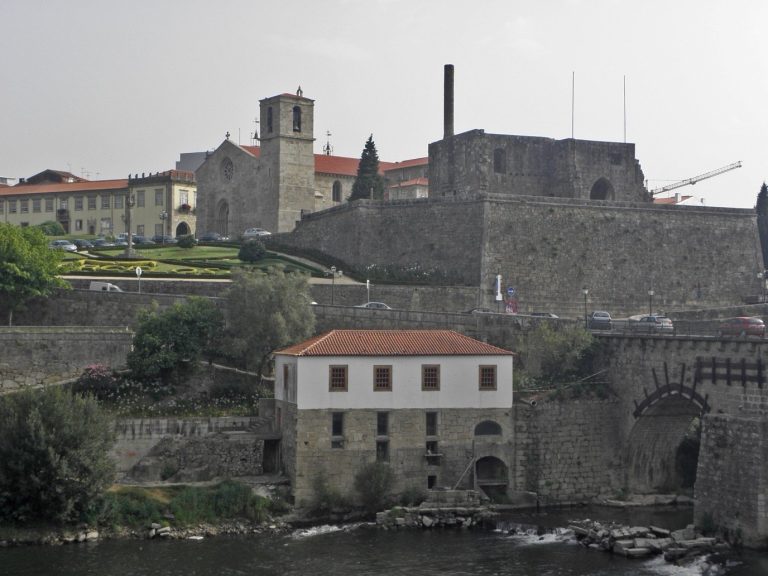
Photo: amaianos from Galicia, CC BY 2.0Barcelos
Home of the Barcelos rooster, Portugal’s emblem, born of a legend about a Galician pilgrim on his way to Santiago saved from the gallows by the crowing of a roast cockerel; the 17th-century calvary that recalls the story is in the archaeological museum.
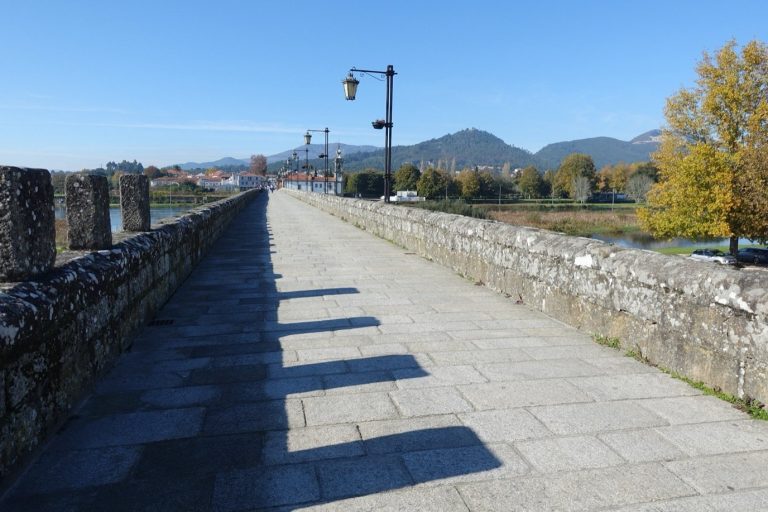
Photo: Joseolgon, CC BY-SA 4.0Ponte de Lima
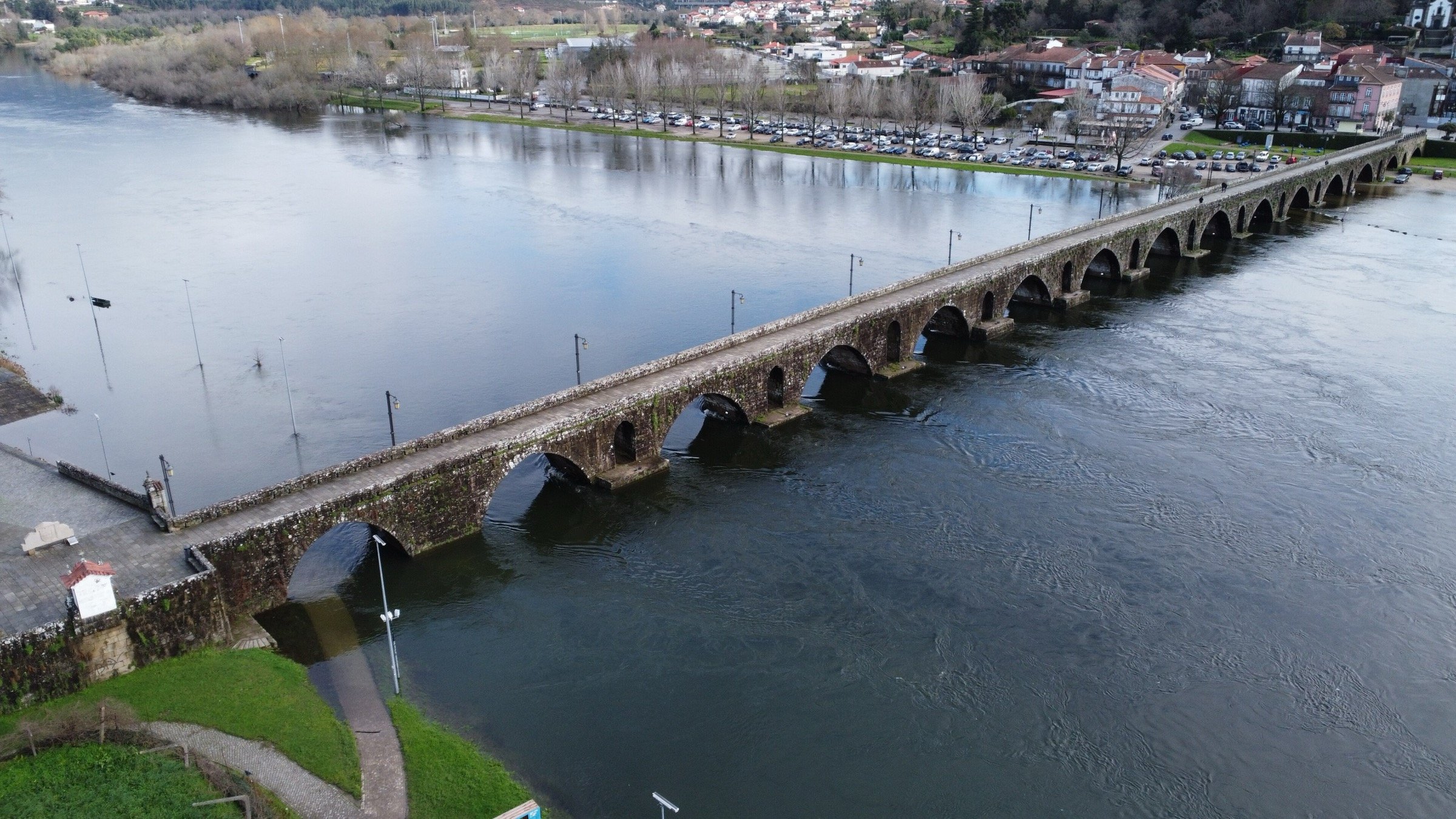
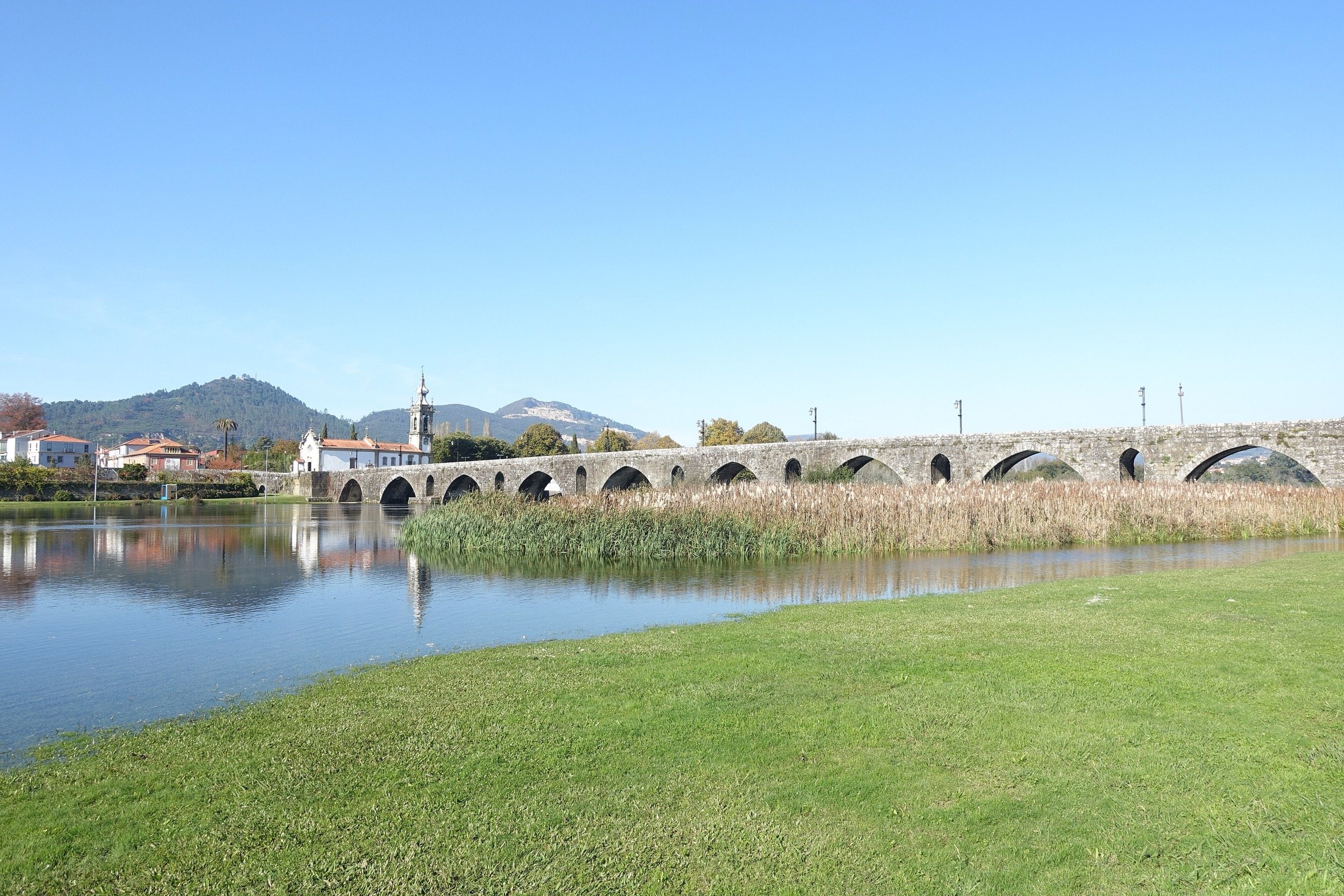
Roman and medieval bridge over the Lima, from which the town takes its name; first charter granted in 1125 by Countess Teresa, which makes it the oldest vila in Portugal; the last stop before the climb of the Labruja.Alto da Portela Grande
Pass in the serra da Labruja, at around 400 m, between Ponte de Lima and Rubiães; the climb gains about 300 m in four kilometres on a stony track, the steepest of the route, before the descent to Rubiães and the border.
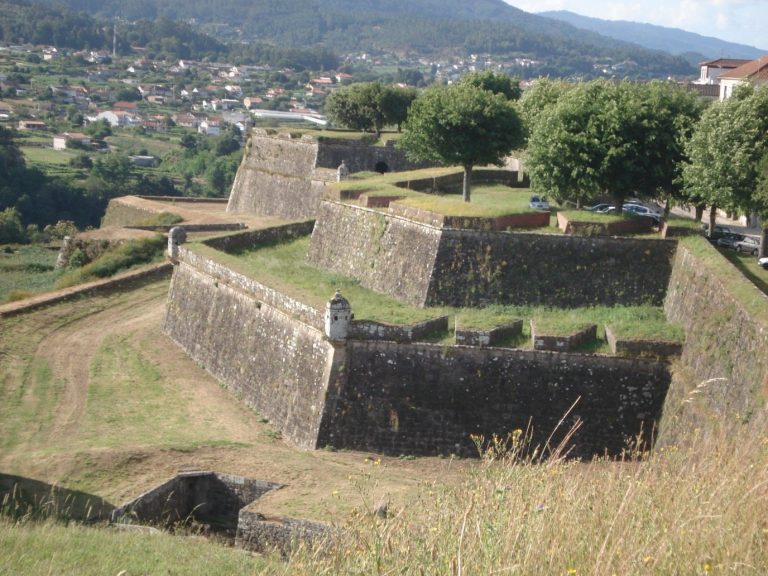
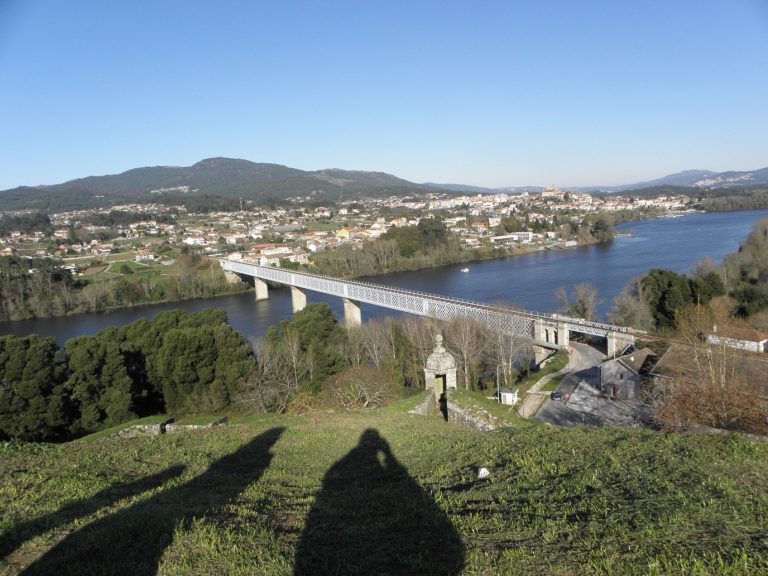
Photo: Wikimedia Commons, Public domainValença
Bastioned fortress of the 17th and 18th centuries on the Portuguese bank of the Minho, with ramparts going back to the 13th century; the international bridge, designed by the engineer Pelayo Mancebo, leads on foot into Spain, where the clocks go forward one hour.
Photo: amaianos from Galicia, CC BY 2.0key pointTui
The first Spanish town, just under 120 km from Santiago, the usual start for the Compostela; the cathedral of Santa María, consecrated in 1225, looks like a fortress above the Minho; one of the most chosen starting points of all the routes in 2025, provisional figures.
Photo: Adrián Estévez (Estevoaei), CC BY-SA 4.0Redondela
At the head of the ría de Vigo, the “town of the viaducts” owes its nickname to two 19th-century railway viaducts; this is where the Coastal Route rejoins the Central Route.
Photo: Jorge Franganillo, CC BY 4.0Pontevedra
A historic centre pedestrianised since 1999 and the chapel of the Virxe Peregrina, patron of the Camino Portugués, built from 1778 on a scallop-shell plan; the Variante Espiritual leaves from here towards Combarro and Armenteira.
Photo: Luis Miguel Bugallo Sánchez (Lmbuga), CC BY-SA 4.0Caldas de Reis
A spa town since antiquity, the Aquae Celenae of the Antonine Itinerary; the hot springs come out at 42°C and 48°C; the penultimate stage town before Santiago.
Photo: Luis Miguel Bugallo Sánchez, CC BY-SA 4.0Padrón
Tradition has the boat carrying the apostle’s body land here; the pedrón, a Roman altar dedicated to Neptune to which it was said to have been moored, is in the church of Santiago; pimientos de Padrón come from the neighbouring village of Herbón.
Central Route, Coastal Route or Variante Espiritual: the Camino Portugués variants
From Porto, two routes lead to Santiago. The Central Route, inland, passes through Barcelos, Ponte de Lima and Valença, crosses the Minho on the international bridge to Tui and has eleven stages.
Variante Espiritual and the Compostela: check its status before choosing
In summer 2025, the Variante Espiritual did not appear in the Pilgrim’s Office statistics and its official recognition was under review; some operators state that the stamp from the boat crossing counts towards the Compostela, other sources say the opposite. Before choosing it for a start in Tui or Porto, ask the Pilgrim’s Office (oficinadelperegrino.com) for the rule in force. The Caminha ferry, on the Coastal Route, depends on tides and fog: check the day’s timetable with the A Guarda town hall.
Read more
The Coastal Route follows the Atlantic through Vila do Conde, Esposende and Viana do Castelo, crosses the Minho estuary by ferry from Caminha to A Guarda, continues through Oia, Baiona and Vigo, then rejoins the Central Route at Redondela: thirteen stages and 271 km according to one guide, that is two extra days, for scenery of beaches, wooden boardwalks and fishing ports. In 2025, the Coastal Route provided almost as many Compostelas as the Central Route.
From Pontevedra, the Variante Espiritual leaves the route for Combarro, the monastery of Armenteira and the Ruta da Pedra e da Auga as far as Vilanova de Arousa, from where a boat goes up the ría de Arousa and the Ulla to Pontecesures, near Padrón, along the course tradition attributes to the apostle’s boat: around 73 km in three stages, one of them on the water. Opened in the early 2010s, it drew, according to the Friends of the Camino Portugués association, about one walker in five passing through Pontevedra in 2024.
Albergues on the Portuguese Camino: where to sleep and what it costs
The accommodation on offer varies widely from one section to the next. The stage table gives the number of places to stay recorded in OpenStreetMap at each arrival town, an order of magnitude to check before you leave.
725 places to stay recorded along the route
- Private albergue3601,935 beds across 67 listings
- Hostal35334 beds across 3 listings
- Xunta albergue5222 beds across 4 listings
- Parish albergue4270 beds across 3 listings
- Municipal albergue3
Accommodation recorded in OpenStreetMap: a guide to how much there is, not a complete list. Switch on the accommodation layer on the map to see where.
Find a bed in the stage towns
Affiliate map: if you book through it, the site earns a commission at no extra cost to you.
The map of hotels, guesthouses and apartments is provided by Stay22, which sets cookies once it loads.
- Lisbon to Porto: pilgrim albergues are rare, often run by associations and seasonal, and several stage towns have none at all; you sleep in guesthouses, hotels or bed and breakfasts, which weighs on the budget and makes booking a must.
- Porto to Tui: municipal and private albergues return at every stage.
- Galicia, from Tui to Santiago: the Xunta albergues, at €10 a night, are taken on arrival, no booking, for one night; private ones take bookings, and guesthouses and hotels round out the choice in towns. The Camino Portugués is the second route of the Galician public network, with 57,281 overnight stays from January to November 2025; in July and August and around Easter, the dormitories are full by mid-afternoon.
To book or not
Between Lisbon and Porto, book every night: places are few and the long stages leave no fallback. From Porto to Tui, outside summer, you will find a bed without booking in most cases. From Tui to Santiago, from June to September, book the private albergues the day before; the public Xunta ones are taken on arrival. The 2027 Holy Year should add to the pressure on this section.
Getting to Lisbon, Porto or Tui, and back from Santiago
Three gateways depending on your start, and a return from Santiago by air or by train.
Lisbon
From Humberto Delgado airport, the red metro line, extended to the terminal in 2012, reaches the centre; the route starts at the cathedral, in the Alfama. CP’s Alfa Pendular trains link Lisbon (Oriente or Santa Apolónia) to Porto-Campanhã in a little under three hours, the Intercidades in a little over three hours.Porto
Francisco Sá Carneiro airport is at the end of metro line E, which reaches Trindade station, in the centre, in about half an hour, with a departure every quarter of an hour. Between Porto-Campanhã and Vigo-Guixar, the Celta train run by CP and Renfe, which calls at Valença, makes two return trips a day in 2 hours 20 minutes.Tui
The nearest airport is Vigo, about thirty kilometres away; Vitrasa bus line A reaches the centre of Vigo in about half an hour, then a Renfe regional train reaches Guillarei station, 3 km from the centre of Tui, in half an hour, or take a Lugove bus. Valença, on the other bank, is the terminus of CP’s Minho line from Porto.Back from Santiago
The Airport Bus, line 6A of the city network, links the intermodal station to Rosalía de Castro airport in twenty to twenty-five minutes; Renfe trains link Santiago to Vigo in a little under an hour, most of them to Urzáiz station, whereas the Celta to Porto leaves from Guixar station: check the station of each train before chaining the two.
Indicative times, check the timetables before you leave
Indicative times, taken from secondary sources (Wikipedia, comparison sites, guides) read on 25 October 2026, to be confirmed on cp.pt, renfe.com, alsa.com and the websites of the urban networks; frequencies change with the season and the day of the week. Portugal is one hour behind Spain: when you cross the Minho, your watch goes forward an hour, which matters for a train or a ferry to catch the same day.
Frequently asked questions
How many days does the Camino Portugués take?
From Lisbon, 27 stages, about four weeks with a rest day in Coimbra or Porto. From Porto, eleven stages on the Central Route, around twelve days, thirteen on the Coastal Route. From Tui, six stages, a short week. With stages of less than 20 km, add a fifth of the time.
Is it better to start from Lisbon, Porto or Tui?
Lisbon suits those who have a month, accept stages of more than 30 km, a lot of road walking and nights in guesthouses, and want to pass through Santarém, Tomar and Coimbra on a section few pilgrims walk: Lisbon is not among the top three starting points of 2025, which are Sarria, Porto and Tui. Porto ranks among the most chosen starting points in the provisional 2025 figures: two weeks, a choice of two routes, accommodation at every stage. Tui, just under 120 km (75 miles) away, remains the usual start for the Compostela: six days of walking, all of it in Galicia.
Does the Camino Portugués qualify for the Compostela from Porto or Tui?
Yes in both cases. The Pilgrim’s Office requires at least 100 km (62 miles) walked without a break on a single route and two stamps a day over that last section: Tui, just under 120 km from Santiago, meets the condition with room to spare; O Porriño, just beyond the 100 km, meets it too, but without margin. For those who start on foot outside Spain, the rule adds at least 70 km on Spanish soil, which a start from Porto satisfies by a wide margin. By bike, 200 km are required, which means starting from Porto or further south.
Central Route or Coastal Route from Porto?
The Central Route goes inland: Barcelos, Ponte de Lima, the climb of the Labruja, Valença and Tui, eleven stages with albergues at every arrival town. The Coastal Route follows the ocean through Viana do Castelo, the Caminha ferry, A Guarda and Baiona, then Vigo, before meeting the Central Route again at Redondela: two extra days, wooden boardwalks over the dunes, more wind and accommodation that varies from one stage to the next. In 2025, the two drew almost the same number of pilgrims.
Is the Camino Portugués difficult?
Of the four routes measured on this site, it is the one with the lowest high point, 467 m against 707 m on the Norte, and the smallest cumulative elevation gain, under 6,600 m in all, without a single pass. The difficulties are the length and the tarmac of the stages between Lisbon and Coimbra, the heat of inland Portugal in summer and the cobblestones, hard on the feet, in the towns of the Minho. The climb to the Alto da Portela Grande, after Ponte de Lima, is the one sustained ascent.
What is the best time of year for the Camino Portugués?
From March to June, temperatures stay moderate, around 15 to 20°C, the albergues open and the crowds stay reasonable, with rain possible in Galicia. In July and August, inland Portugal passes 30°C on some days and the Tui to Santiago section fills up. September and October stay pleasant and quieter. In winter, some association albergues between Lisbon and Porto are seasonal: the one in Alpriate, for example, was advertised as open from April to mid-October, and its future is uncertain (see the box in the stages section).
Where do you get the credencial for the Camino Portugués?
In Lisbon, at the cathedral or at the pilgrims’ office of the Via Lusitana association, in the church of Conceição Velha; in Porto, at the cathedral shop or at the Sé tourist office; elsewhere, from an accredited friends of the Camino association. For the Compostela, the Pilgrim’s Office accepts a credencial issued by the cathedral of Santiago or an accredited association, and no other.
Camino Francés, Camino del Norte, Camino Primitivo and the Camino guide: related pages
The Camino Francés, from Saint-Jean-Pied-de-Port, remains the most walked route and the densest in albergues; its start from Sarria is, for one week, the equivalent of the start from Tui.
Photo: MartinD, CC BY-SA 3.0Camino Francés
from Saint-Jean-Pied-de-Port
Photo: José Antonio Gil Martínez, CC BY 2.0Camino del Norte
from Irún
Photo: José Antonio Gil Martínez from Vigo, Spain, CC BY 2.0Camino Primitivo
from Oviedo
Photo: Simon Burchell, CC BY-SA 4.0Compare the routes
Camino de Santiago guide
Read more
For a wilder coast than Portugal’s, the Camino del Norte follows the Cantabrian shore from Irún; the Camino Primitivo, from Oviedo, crosses the mountains of Asturias. For the Compostela rules, the budget, the season and the packing list, the Camino de Santiago guide gathers the facts shared by all the routes.
Sources and checks
47 sources
- Viaje Camino de Santiago, citing the Oficina del Peregrino (provisional 2025 statistics, article of 7 October 2026) checked on October 25, 2026
- Wikipedia EN (Portuguese Way) checked on October 25, 2026
- Wikipedia GL (Variante Espiritual) checked on October 25, 2026
- Albergues Camino Santiago (article of 7 August 2025, citing the Asociación de Amigos del Camino Portugués) checked on October 25, 2026
- Viaje Camino de Santiago (Camino Portugués por la Costa desde Oporto) checked on October 25, 2026
- Xunta de Galicia, official website of the Camino in Galicia checked on October 25, 2026
- Gronze forum (June 2024 thread, spot check); viajecaminodesantiago.com (Alpriate albergue listing: Via Lusitana, 10 beds, April to mid-October); caminodesantiago.me forum (new route along the Tagus after the Vasco da Gama bridge) checked on October 25, 2026
- Associação de Peregrinos Via Lusitana (accommodation list, footer “© 2024”) checked on October 25, 2026
- Visit Portugal (Turismo de Portugal) checked on October 25, 2026
- Wikipedia EN (Santarém) checked on October 25, 2026
- Wikipedia EN (Convent of Christ) checked on October 25, 2026
- Wikipedia EN (University of Coimbra) checked on October 25, 2026
- Wikipedia EN (Elizabeth of Aragon, Elizabeth of Portugal) checked on October 25, 2026
- Wikipedia EN (Porto) checked on October 25, 2026
- Wikipedia EN (Rooster of Barcelos) checked on October 25, 2026
- Wikipedia EN (Ponte de Lima) checked on October 25, 2026
- El Camino con Correos (Ponte de Lima to Rubiães stage); Gronze spot check (315 m over 4.2 km from Codeçal) checked on October 25, 2026
- Wikipedia EN (Valença) checked on October 25, 2026
- Wikipedia ES (Tuy) checked on October 25, 2026
- Wikipedia EN (Redondela) checked on October 25, 2026
- Wikipedia EN (Church of the Pilgrim Virgin); spain.info (Iglesia Peregrina) checked on October 25, 2026
- Wikipedia EN (Pontevedra) checked on October 25, 2026
- Wikipedia EN (Caldas de Reis) checked on October 25, 2026
- Wikipedia ES (Padrón) checked on October 25, 2026
- CaminoWays (article of 9 March 2026, secondary source) checked on October 25, 2026
- Wikipedia EN (Aeroporto station, Lisbon Metro) checked on October 25, 2026
- The Portugal News (12 December 2024, citing CP); comparison sites (Planetware, Matador) for usual journey times checked on October 25, 2026
- Wikipedia EN (Aeroporto station, Porto Metro); Portugal Visitor (line E) checked on October 25, 2026
- Wikipedia EN (Celta) checked on October 25, 2026
- Wikipedia EN (Vigo-Guixar) and Wikipedia EN (Vigo-Urzáiz) checked on October 25, 2026
- Wikipedia EN (Linha do Minho) checked on October 25, 2026
- Viaje Camino de Santiago (Cómo llegar a Tui, 4 April 2025) checked on October 25, 2026
- Spain.info (Vigo airport); Vitrasa (line A) checked on October 25, 2026
- ALSA (Santiago bus station) checked on October 25, 2026
- Omio (comparison site, Santiago to Vigo); Renfe not readable without a form checked on October 25, 2026
- Albergues Camino Santiago (best time of year, June 2025) checked on October 25, 2026
- caminodesantiago.me forum (“Albergues from Lisboa to Porto” thread); Stingy Nomads (Portuguese Camino from Lisbon) checked on October 25, 2026
- Oficina del Peregrino checked on October 24, 2026
- Suisse Rando (walking time calculation method) checked on October 24, 2026
- santiago.es (Pilgrim’s Office dashboard) checked on October 25, 2026
- Copernicus EU-DEM
- OpenStreetMap contributors (ODbL 1.0)
- Wikidata (CC0 1.0)
- alberguescaminosantiago.com
- pilgrim.es
- santiago.es
- viajecaminodesantiago.com