

 Photo: José Antonio Gil Martínez, CC BY 2.0
13 routes
Twelve end in Santiago, from the Camino Francés, the most walked, to the Portugués; one leads on to the ocean.
For more than a thousand years, walkers have crossed Europe towards the tomb of the apostle in Santiago de Compostela, on what English speakers also call the Way of St James.
A bed every night Your itinerary ends each day at one of the 2,393 places to stay recorded along the four routes.
Measured on the trail 2,528 km and 109 stages measured on the OpenStreetMap trail, with ascent and walking time.
Sourced and dated Compostela rules, Holy Year, Pilgrim Office figures: every fact shows its source and the date we checked it.
On the map, twelve routes end at the same point, the cathedral of Santiago, and a thirteenth sets out from it towards Finisterre and Muxía.
13 routes shown
Route data © OpenStreetMap contributors (ODbL).
The starting points are far apart: the Pyrenees at Saint-Jean-Pied-de-Port for the Camino Francés, Lisbon and Porto for the Portugués, Irún for the Norte, Oviedo for the Primitivo, Ferrol for the Inglés, Seville for the Vía de la Plata, from which the Camino Sanabrés branches off at Granja de Moreruela, Ponferrada for the Camino de Invierno; in France, Le Puy-en-Velay, Vézelay, Paris for the Tours route, and Arles.
The map brings together the routes, drawn from OpenStreetMap, with the distance from each starting point to Santiago. The Camino Francés and the routes of northern Spain, like the four French routes, are listed as UNESCO World Heritage.
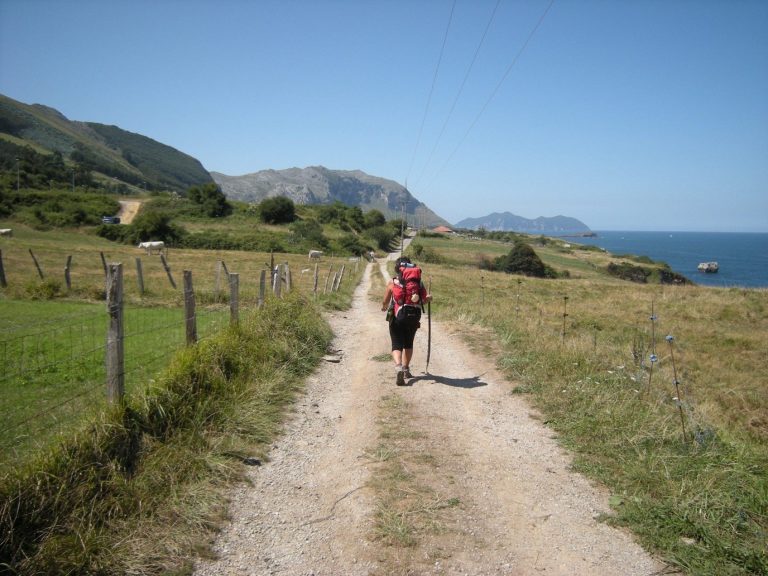
Photo: José Antonio Gil Martínez, CC BY 2.013 routes
Twelve end in Santiago, from the Camino Francés, the most walked, to the Portugués; one leads on to the ocean.
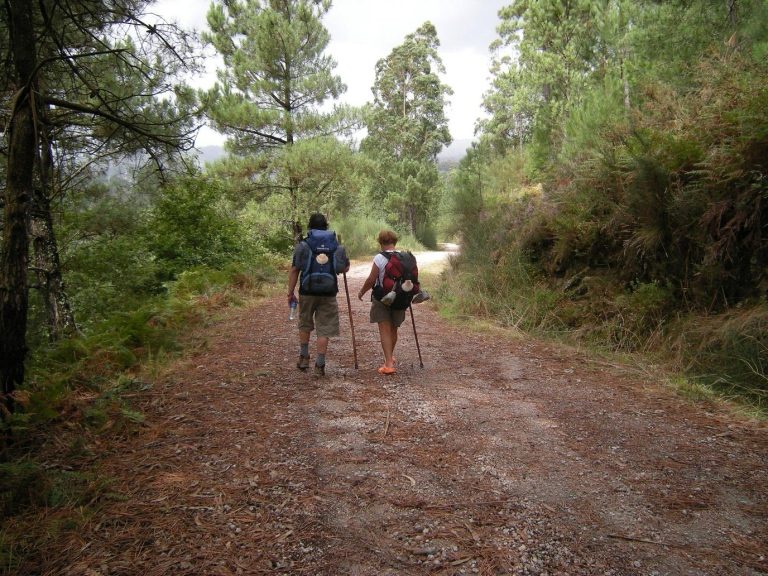 Photo: José Antonio Gil Martínez, CC BY 2.0
5 weeks
For the whole Camino Francés from Saint-Jean-Pied-de-Port; one week is enough from Sarria or Tui.
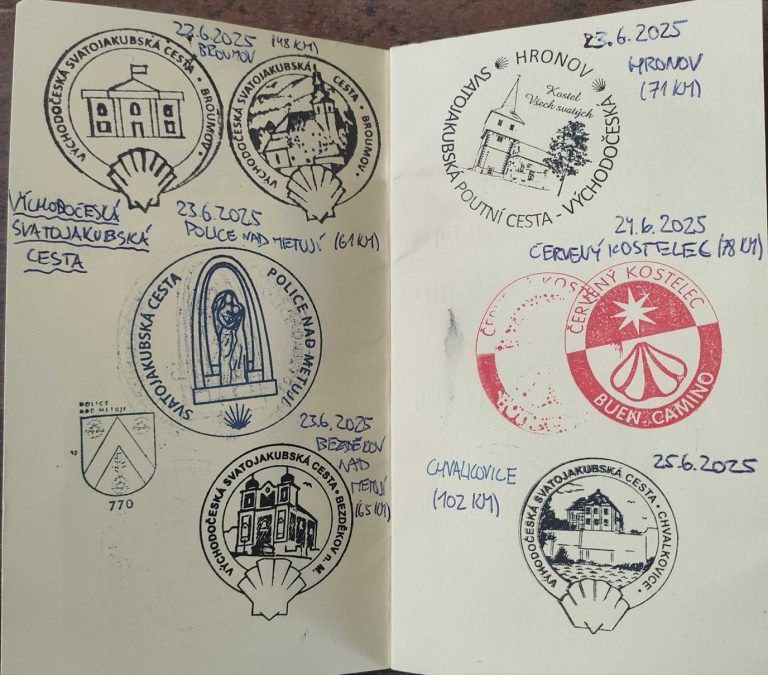 Photo: Jáchym Opavský, CC BY-SA 4.0
100 km on foot
Or 200 km by bike, with a credencial stamped twice a day on that final stretch.
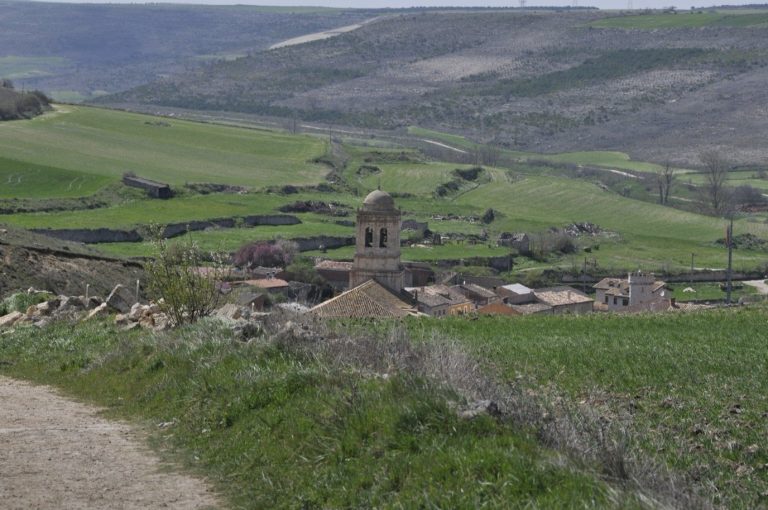 Photo: Manuel Velazquez, CC BY 3.0
May-June, September
Mild weather and manageable crowds; summer fills the albergues, winter closes some of them.
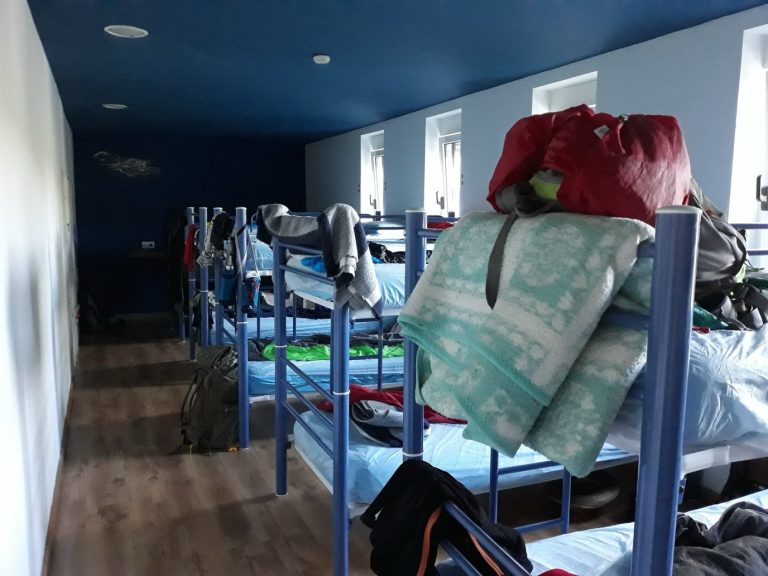 Photo: Simon Burchell, CC BY-SA 4.0
€40 to €50 a day
In a dormitory with a pilgrim menu, more for a private room; a night in a Galician public albergue costs €10.
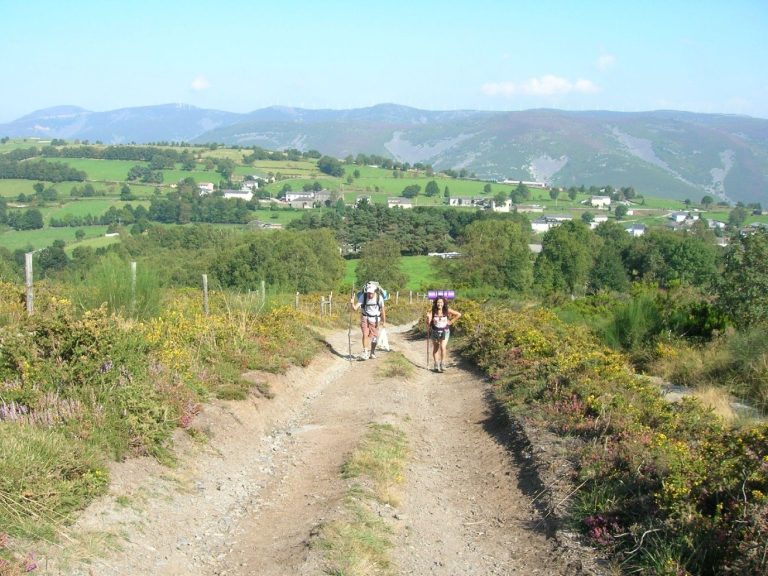 Photo: José Antonio Gil Martínez from Vigo, Spain, CC BY 2.0
Medium size
Weight matters more than the list: albergues provide a bed and every village has a grocery or a bar.
The table compares the thirteen routes on length, number of classic stages, elevation gain, difficulty and how busy they are.
| Camino Francés | Saint-Jean-Pied-de-Port | 768 km | 49 | 34 | Moderate | 10,424 m | 45.6% |
|---|---|---|---|---|---|---|---|
| Portuguese Camino | Lisbon | 622 km | 39 | 27 | Moderate | 6,529 m | 35.9% |
| Camino del Norte | Irún | 827 km | 52 | 34 | Demanding | 14,398 m | 4% |
| Camino Primitivo | Oviedo | 312 km | 20 | 14 | Very hard | 7,001 m | 5.3% |
| Camino Inglés | Ferrol | 112 km | 8 | 5 | 5.7% | ||
| Vía de la Plata | Seville | 706 km | 45 | 27 | 1.7% | ||
| Finisterre and Muxía Way | Santiago de Compostela | 90 km | 6 | guide coming | 0.4% | ||
| Camino de Invierno | Ponferrada | 258 km | 17 | guide coming | 0.5% | ||
| Camino Sanabrés | Granja de Moreruela | 363 km | 23 | guide coming | |||
| Le Puy Way (Via Podiensis) | Le Puy-en-Velay | 750 km | 47 | 32 | |||
| Vézelay Way (Via Lemovicensis) | Vézelay | 1,079 km | 68 | guide coming | |||
| Tours Way (Via Turonensis) | Paris | 1,042 km | 66 | guide coming | |||
| Arles Way (Via Tolosana) | Arles | 802 km | 51 | guide coming |
Click a column heading to sort. Days are estimated at the chosen pace, without rest days.
Read the elevation gain before the length
The Inglés fits in under a week but strings together long stages; the Primitivo, more than 310 km through the Asturian mountains, piles up the climbs. Total length tells you little about the effort.
For a first Camino, the Camino Francés is the simplest choice: continuous waymarking, albergues at every stage, and close to half of the Compostelas of 2025 went to pilgrims who arrived by it, so you are never short of company. The Camino Portugués, from Lisbon, Porto or Tui, is gentler; its coastal variant follows the Atlantic. The Camino del Norte alternates cliffs and beaches, with more climbing. The Primitivo, the oldest route, crosses the mountains of Asturias over more than 310 km from Oviedo, in fourteen classic stages. The Inglés takes less than a week from Ferrol; the Vía de la Plata, from Seville, is the longest and the loneliest, the Sanabrés forms its Galician end, and the Camino de Invierno leaves the Bierzo along the Sil valley instead of climbing to O Cebreiro. The four French routes reach the Pyrenees with a network of walkers’ gîtes; from Santiago, the Finisterre and Muxía route leads to the ocean.
The time it takes depends on where you start as much as on the route. At a steady pace, between 18 and 28 km a day depending on your fitness, the whole Camino Francés from Saint-Jean-Pied-de-Port takes around five weeks.
Walking days only: add one rest day a week or so, and a spare day before your trip home.
Keep a spare day
Allow a buffer day before you travel home: a blister or a storm is hard to make up with a fixed plane ticket. That day also covers collecting the Compostela.
Most walkers do less. In 2025, close to a third of the Compostelas, according to the provisional figures of the Pilgrim’s Office (Oficina del Peregrino), went to pilgrims who had set off from Sarria, a little over 100 km from Santiago; Porto then Tui come next. One week is enough from Sarria or Tui, about ten days from Porto, two weeks from León.
On each route page, the planner suggests a day-by-day breakdown from your number of days and your pace, with a recommended starting point.
The Compostela is the certificate the cathedral issues to pilgrims who reach Santiago for a religious or spiritual reason.
Source: Oficina del Peregrino, checked on October 24, 2026
Photo: Jáchym Opavský, CC BY-SA 4.0Where to get the credencial
Before you leave, from a Camino association authorised by the cathedral; on arrival, at the Pilgrim’s Office. The price varies from one issuer to another; the Office does not set one. Albergues often ask for it before giving you a bed.
The rules of the Pilgrim’s Office come down to three points: walk at least the last 100 km on foot or on horseback, or 200 km by bike, on a single route; carry a credencial (the pilgrim passport) issued by the cathedral or by an association it has authorised; have it stamped twice a day on that final stretch, with the date, at the start and at the end of each stage.
Stamps are available in albergues, churches, town halls and bars. If you begin your walk outside Spain, at least 70 km must be covered on Spanish territory. The Camino can be walked in several trips, in geographical order. Sarria is the most common starting point because it sits just beyond the threshold.
The Camino can be walked all year round, in very different conditions.
Photo: Manuel Velazquez, CC BY 3.0Holy Year 2027: dates to be confirmed by the cathedral
A Compostela Holy Year occurs when 25 July, the feast of St James, falls on a Sunday: that is the case in 2027, then in 2032. The Holy Door is due to open on 31 December 2026 and close on 31 December 2027. The cathedral presented the motto of the year on 24 September 2026; the programme will follow. Check the dates on catedraldesantiago.es.
From May to June and from September to early October, the days are long, temperatures moderate and the albergues open. July and August concentrate the crowds, with heat on the Meseta and albergues in high demand on the last 100 km in Galicia.
In winter, some albergues close and, between 1 November and 31 March, Navarre shuts the variant over the Col de Lepoeder: the first stage of the Camino Francés goes through Valcarlos. The 2027 Holy Year should draw more pilgrims: during the previous one, in 2022, the Pilgrim’s Office had passed the total for the whole of 2019, that is 347,578 Compostelas, by the end of September. If you walk in 2027, book early on the last 100 km.
Your budget depends first on the bed. In the public albergues of the Xunta de Galicia network, a night costs €10 per person, no booking, one night only per stage.
Photo: Simon Burchell, CC BY-SA 4.0Prices surveyed in 2026
Public Galician network rate read on the official website of the Camino in Galicia on 24 October 2026; ranges for private dormitories, double rooms, menus and daily budgets taken from guides and albergue listings on the Camino Francés and in Santiago in July and August 2026. Check with the accommodation before you leave.
Private dormitory albergues range from €12 to €25 depending on the place and the season, the top of the range in Santiago itself; albergues run on a “donativo” basis leave the amount to you, and donativo does not mean free.
The pilgrim menu, three courses with bread and a drink, comes to around €10 to €14 in the villages of the Camino Francés; allow €20 to €30 a day for food. In total, a walker in dormitories and on pilgrim menus spends in the region of €40 to €50 a day, transport excluded. A private double room costs, in the albergues surveyed in 2026, €42 to €70 per room, to be shared between two. Carry cash for small albergues and village bars.
A medium-sized hiking backpack is enough: albergues provide a bed, often a kitchen, and every village has a grocery or a bar.
Photo: José Antonio Gil Martínez, CC BY 2.0Too much weight
A common trap: a pack that is too heavy, which your knees will feel from the first stages. Weigh it loaded and remove everything you packed “just in case”. Luggage transfer services, available on the Francés and the Portugués, help out in case of injury.
Weight matters more than the list. Two sets of clothes, washed in turn each evening, will see you through the whole walk. Choose boots or shoes you have already worn in, never new ones on departure day. If a blister becomes infected or a pain persists, see a pharmacist or a doctor rather than pushing on.
Walkers on the Camino Francés, and those on the Primitivo and the Norte, which join it at Melide and Arzúa, arrive over Monte do Gozo, the last hill before the city; the other routes come in through other suburbs.
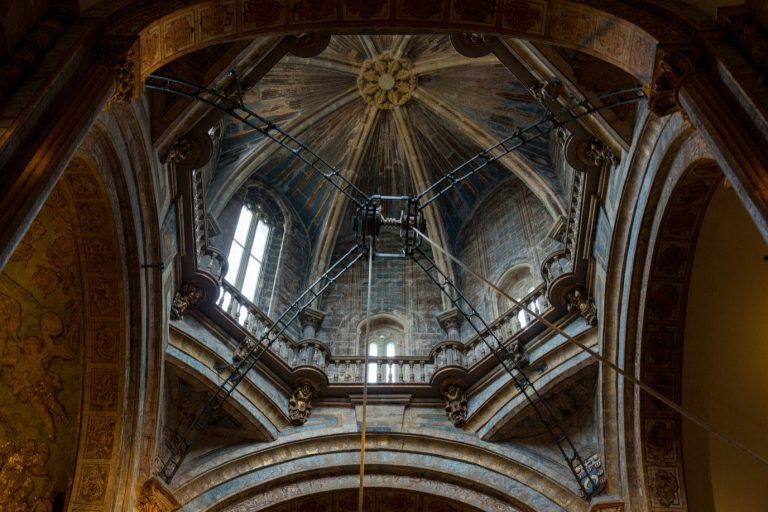 Photo: Fernando Pascullo, CC BY-SA 4.0
Pilgrims’ mass moved since 16 October 2026
Because of works in the main chapel, the cathedral has moved the pilgrims’ masses to the neighbouring church of San Agustín from 16 October 2026 until further notice; the morning mass stays in the Chapel of the Communion. Times on catedraldesantiago.es (notice of 17 September 2026).
Botafumeiro: a calendar to check
The censer is swung at the major liturgical feasts and, on request, for groups; it stays still at most masses. The calendar is published on the Liturgia page of the cathedral website.
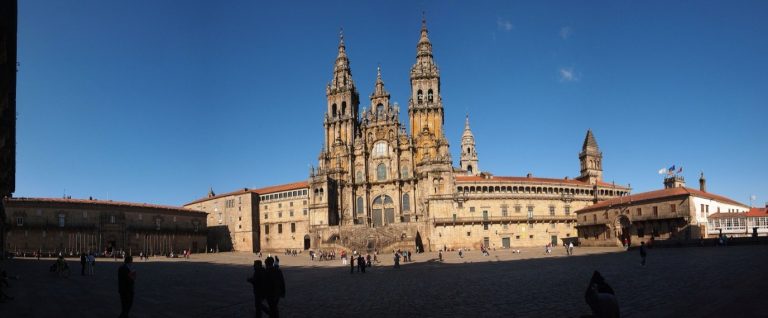
All of them end on Praza do Obradoiro, in front of the baroque façade of the cathedral, which houses the crypt with the tomb of the apostle. Three moments mark the end of the Camino: the pilgrims’ mass; collecting the Compostela at the Pilgrim’s Office, on Rúa das Carretas, a few minutes’ walk away; and, on major feast days or at the request of a group, the botafumeiro, the giant censer swung across the transept. Many then carry on to Cape Finisterre and Muxía, facing the Atlantic.
One week from Sarria or Tui, about ten days from Porto, two weeks from León, around five weeks for the whole Camino Francés from Saint-Jean-Pied-de-Port. The detail depends on your daily pace: the planner on each route page works it out from the days you have.
In the region of €40 to €50 a day in 2026 for a walker in dormitories and on pilgrim menus, excluding transport to the start and back. The bed makes the difference: €10 in the public Galician network, €12 to €25 in a private dormitory, €42 to €70 for a double room. Cash remains useful in the villages.
The public albergues of the Xunta de Galicia take no bookings: beds are given on arrival, in order of priority, for one night. Most private albergues accept bookings, advisable for the nights at risk: July, August, Easter and the last 100 km. A credencial to show makes check-in easier everywhere.
Yes. The yellow arrows and scallop shells make navigation simple on the main routes, and every evening the albergues bring together walkers who meet again from stage to stage. For a first solo walk, the Camino Francés offers the most services; the Vía de la Plata or the Camino de Invierno call for more self-reliance.
Yes. The Compostela then requires at least the last 200 km, which on the Camino Francés means starting from around Ponferrada (205 km) or further away, with two stamps a day on that stretch. Cyclists come after walkers in the public Galician albergues, and some paths require you to follow the road.
The Camino Francés: continuous waymarking, albergues at every stage, plenty of other walkers. The Camino Portugués from Porto, above all along the coast, is the gentler alternative; the Primitivo and the Norte suit a second Camino better. The comparison table above puts the figures side by side.
At the Pilgrim’s Office in Santiago, on showing your credencial stamped twice a day over the last 100 km on foot or on horseback (200 km by bike). You state a religious or spiritual reason; the document is handed over on the spot, on the day you arrive or the next day.