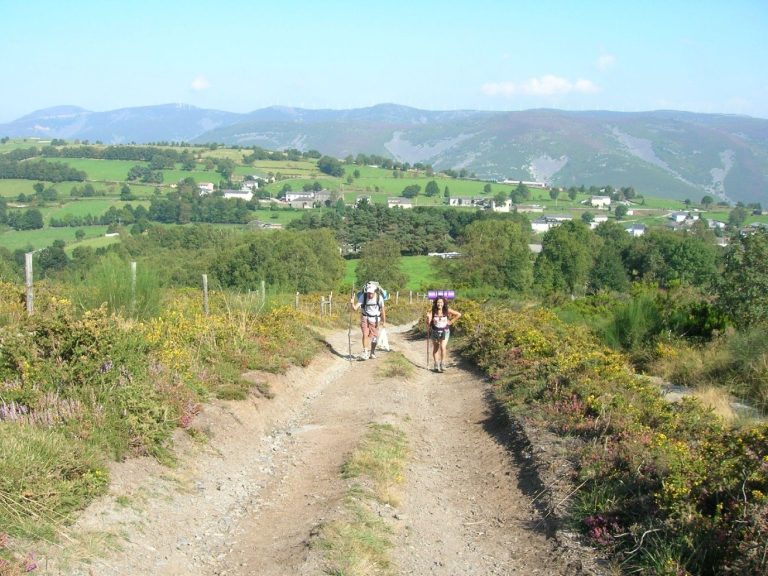
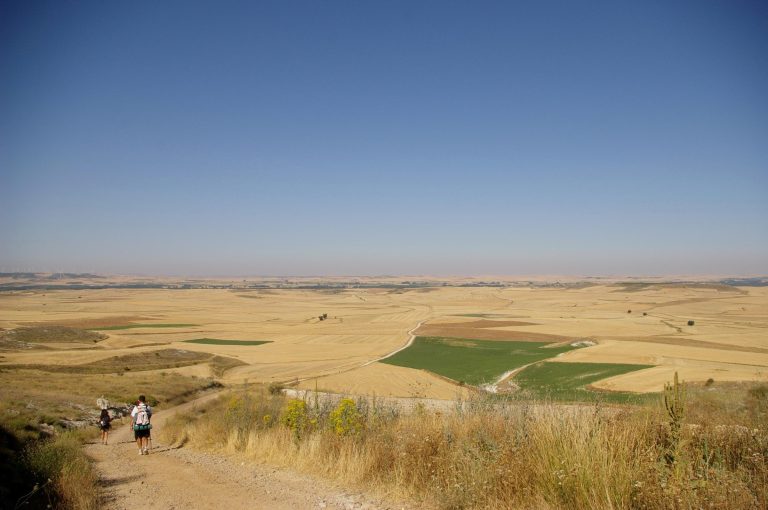
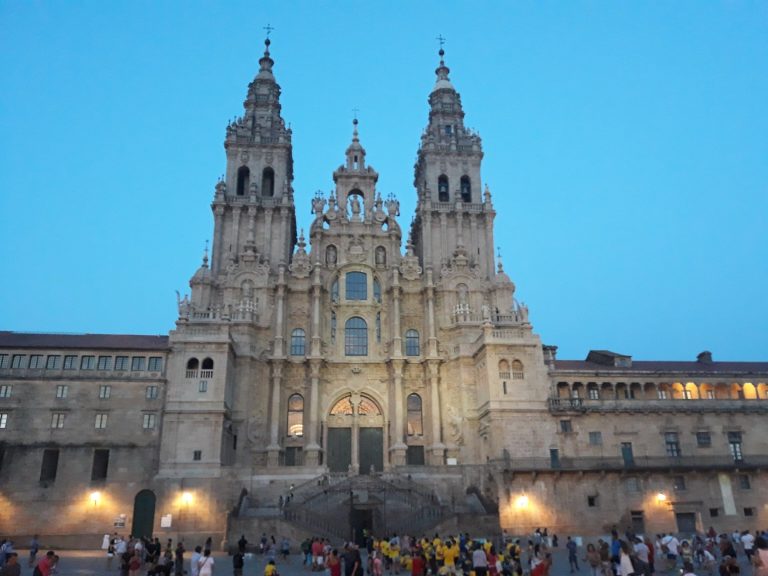
Photo: Iñaki LLM, CC BY-SA 3.0


Camino del Norte: from Irún to Santiago along the Cantabrian coast, stage by stage
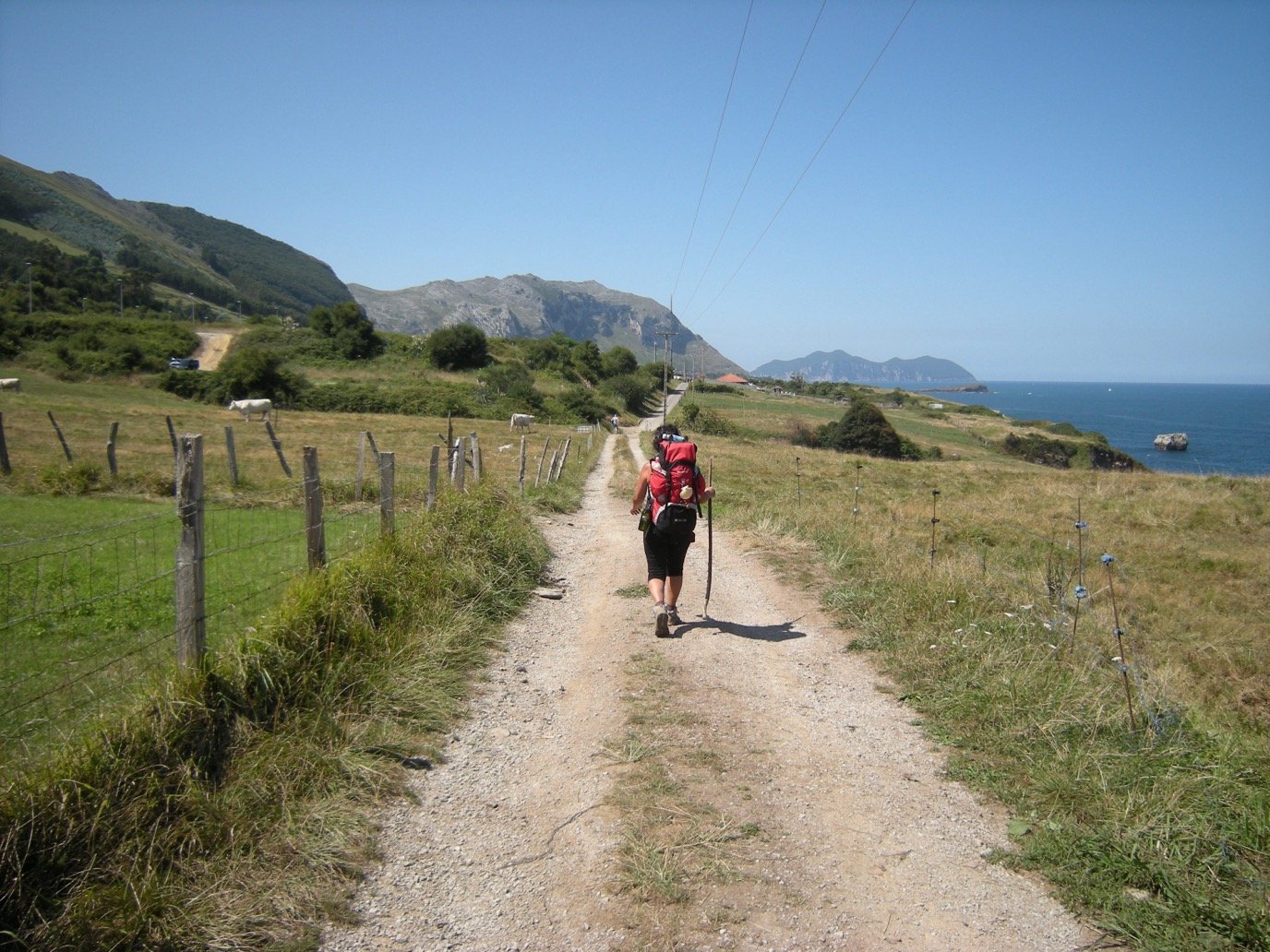
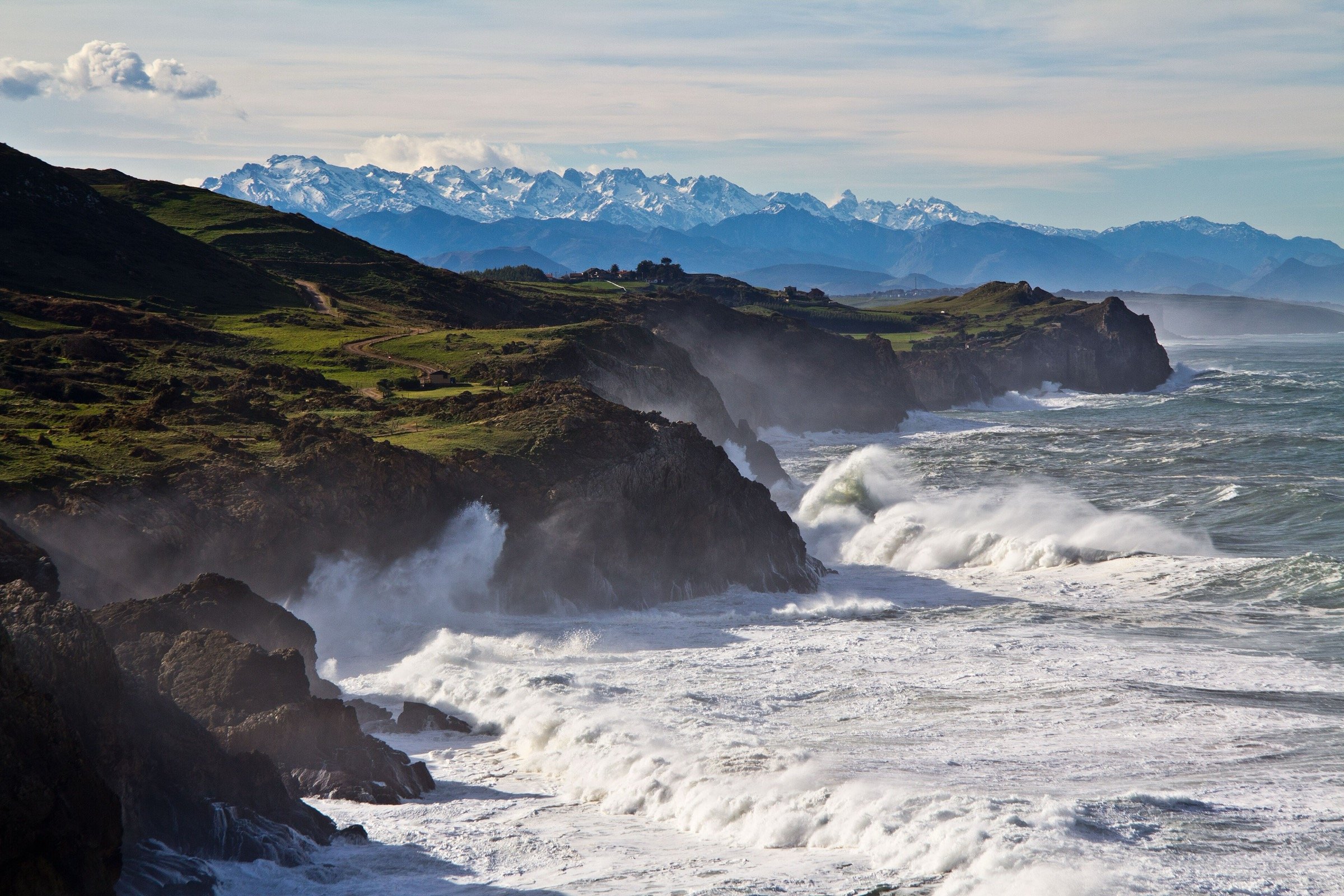
The Camino del Norte, or Northern Way, starts in Irún, on the French border, and follows the Cantabrian coast through San Sebastián, Bilbao, Santander, Asturias and Ribadeo, before leaving the sea for the plateaus of inland Galicia and joining the Camino Francés at Arzúa, two days from Santiago.
- Classic start
- Irún
- How long
- 827 km, about 52 days at 16 km a day
- Difficulty
- Demanding, 14,398 m of ascent
Camino del Norte elevation profile: a jagged Basque Country, Galicia on a plateau
The elevation profile, computed along the route from the Copernicus European terrain model, has no pass at all: it lines up short climbs, area by area.
Hover over a stage to read it, click to open it on the map.
- Easy
- Moderate
- Hard
- Very hard
How many days for the Camino del Norte: eight days from Ribadeo, five weeks from Irún
Five weeks in a row remain rare, and the Camino del Norte is easy to split into sections: San Sebastián, Bilbao, Santander, Gijón and Avilés have a Renfe station, and ALSA coaches link Irún to Santiago.
Baamonde or Vilalba for the Compostela
Baamonde lies 100.9 km from Santiago on our track: the margin above the 100 km required comes to less than a kilometre, and the distance used by the Pilgrim’s Office may differ from ours. Start from Vilalba, at 120 km, for five days of walking and a margin nobody will question, with two stamps a day on the credencial.
Semana Grande in San Sebastián, Aste Nagusia in Bilbao
The Semana Grande fills San Sebastián in the week of 15 August, from Saturday to Saturday; Bilbao celebrates its Aste Nagusia in the second half of August. Beds run short and prices climb: on those dates, sleep before or after the city, in Pasaia or Zarautz for the first, Lezama or Portugalete for the second, or book weeks ahead.
Read more
Enter your available days and your pace; the planner suggests the starting point that gets you to Santiago in the time you have, with a day-by-day breakdown.
The most common starting points match round durations: four weeks from Bilbao, three from Santander, two from Gijón, eight days from Ribadeo, five days from Vilalba. If you want the Compostela, tick the option: any start less than 100 km from Santiago is ruled out. The selected section is highlighted on the map.
Camino del Norte stages from Irún to Santiago
The table follows a 34-stage breakdown, cross-checked between three guides, with the distance, the elevation gain, the estimated walking time, the town at the end and the number of places to stay recorded there. Distances and elevation are measured on the OpenStreetMap route; times follow the Swiss hiking method, breaks excluded. Guides count 34, 35 or 36 stages depending on where they cut.
Seven stages exceed 30 km, among them Santander to Santillana del Mar (37.5 km) and Baamonde to Sobrado dos Monxes (40.1 km). Two split points appear in the database: the San Martín albergue in Miraz, run by the Confraternity of Saint James on a donativo basis from 1 April to 31 October, 15 km from Baamonde, and the public albergue in Mondoñedo, 11 km from Lourenzá. The accommodation column shows the opposite elsewhere: a single record in Cadavedo and in Luarca, two in Soto de Luiña; in that part of western Asturias, book or adjust the stage.

What to see on the Camino del Norte, from San Sebastián to Sobrado dos Monxes
The places below appear on the map and in the stage table, with the distance left to Santiago.
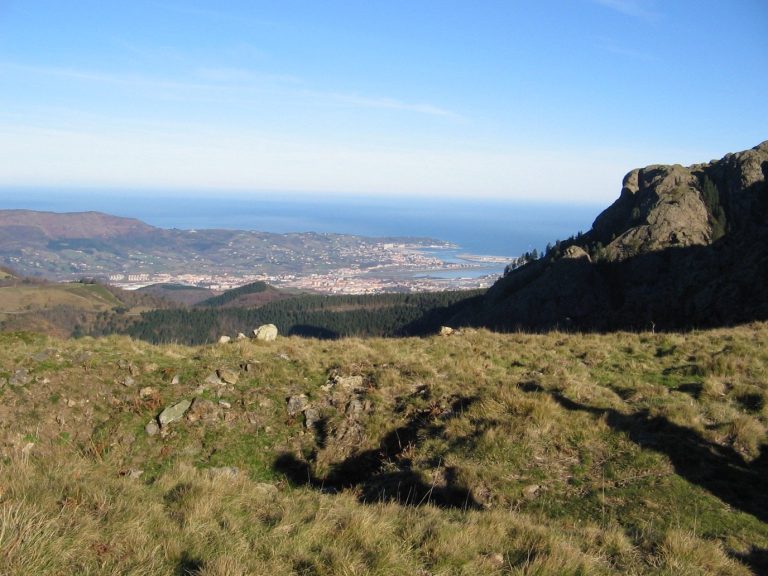
Photo: Iñaki LLM, CC BY-SA 3.0The first town on the route, facing Hendaye across the Bidasoa; the pilgrim albergue runs on a donativo basis, and the first stage climbs straight onto the slopes of Jaizkibel, which the coastal route crosses over its first kilometres.
Photo: Mariordo (Mario Roberto Durán Ortiz), CC BY-SA 4.0San Sebastián
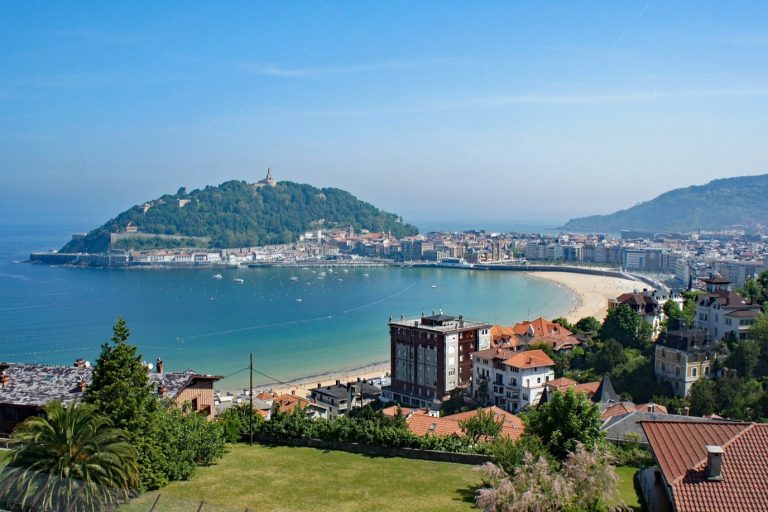
La Concha bay and the old town, reached over Mount Ulía after the boat crossing of the bay of Pasaia, two minutes between Pasai Donibane and Pasai San Pedro; the first large city, 24.9 km from the start.
Photo: Jörg Braukmann, CC BY-SA 4.0Deba
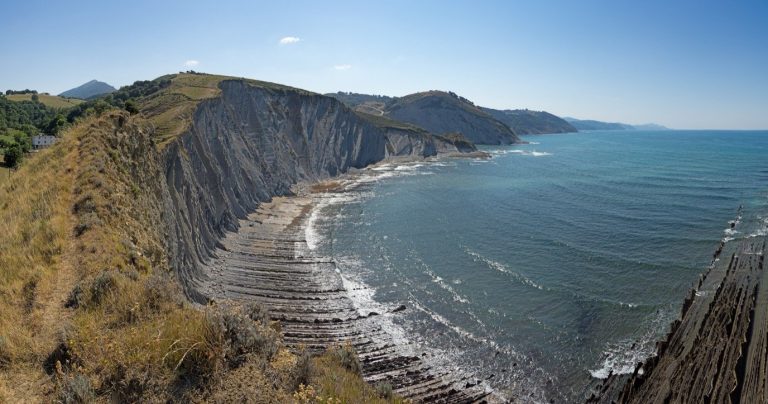
The end of the flysch cliffs that run for 13 km from Zumaia, sixty million years of upended strata, a UNESCO Global Geopark since 2015; the next stage to Markina, inland, is the highest in the Basque Country, at 498 m.
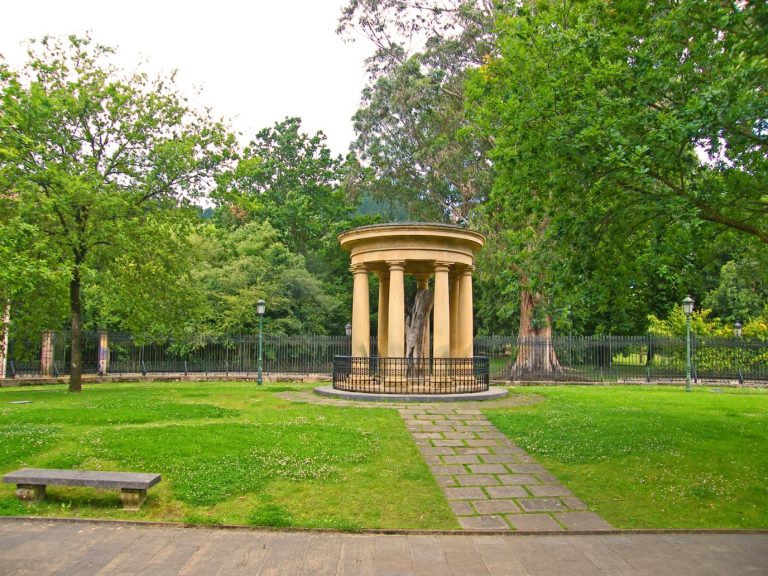
Photo: Mario Martí, CC BY 2.0Guernica (Gernika)
Basque town bombed on 26 April 1937, the subject of Picasso’s painting; the Casa de Juntas and the oak under which the lords of Biscay swore to uphold the fueros. The route arrives from Markina by way of the collegiate church of Ziortza, founded in the 10th century, where Cistercian monks have run a guesthouse since 1988.
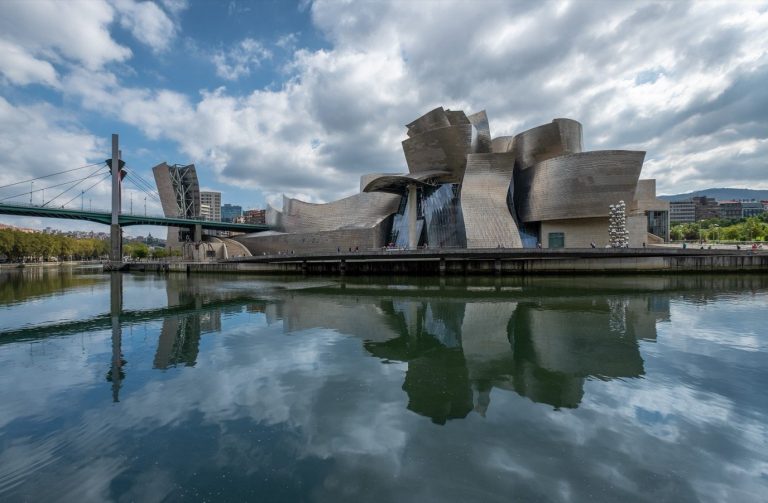
Photo: Jules Verne Times Two, CC BY-SA 4.0Bilbao
Frank Gehry’s Guggenheim Museum, opened on the ría in October 1997, and the seven streets of the Casco Viejo; a common start for four weeks of walking, 674.5 km from Santiago.
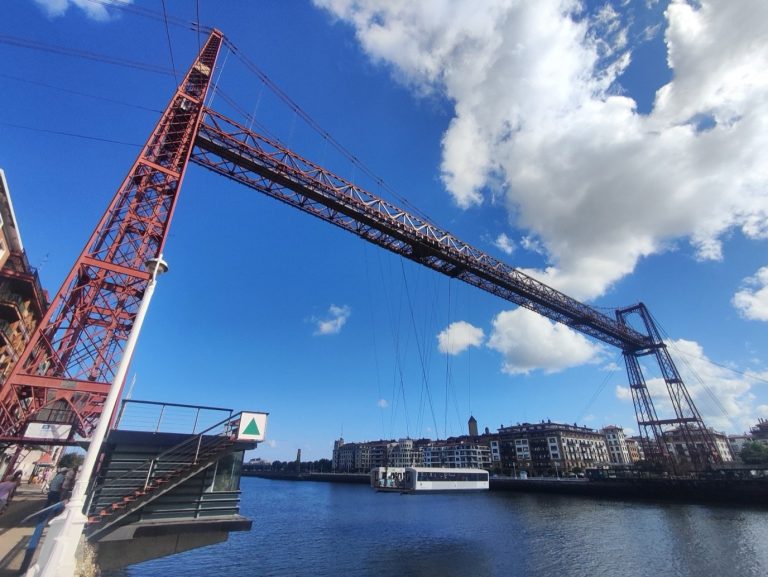
Photo: Mentxuwiki, CC BY-SA 4.0Portugalete
The Vizcaya Bridge, a transporter bridge of 1893 designed by Alberto de Palacio with the engineer Ferdinand Arnodin, 160 m span, World Heritage since 2006; the gondola crosses the ría to Las Arenas, and a high walkway has been open to visitors since 1999.
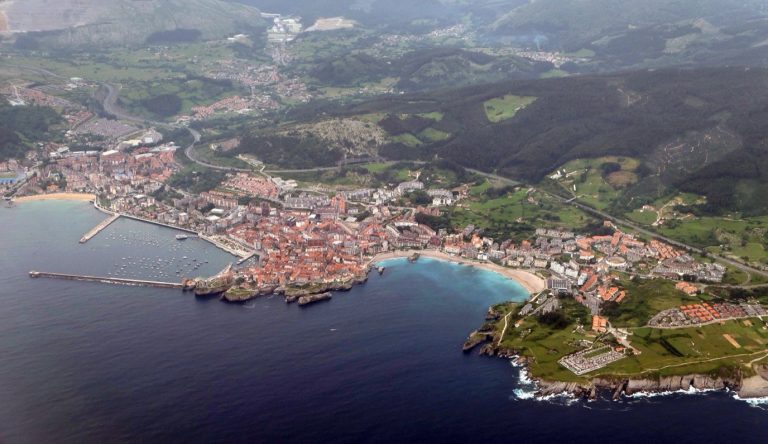
Photo: Adam Cli, CC BY-SA 4.0Castro Urdiales
Cantabrian port huddled around the Gothic church of Santa María de la Asunción, an element of the UNESCO property of the northern routes, and the castle of Santa Ana, built from the 12th century on its rock, which has housed a lighthouse since 1853.
Photo: Year of the dragon, CC BY-SA 3.0Santander
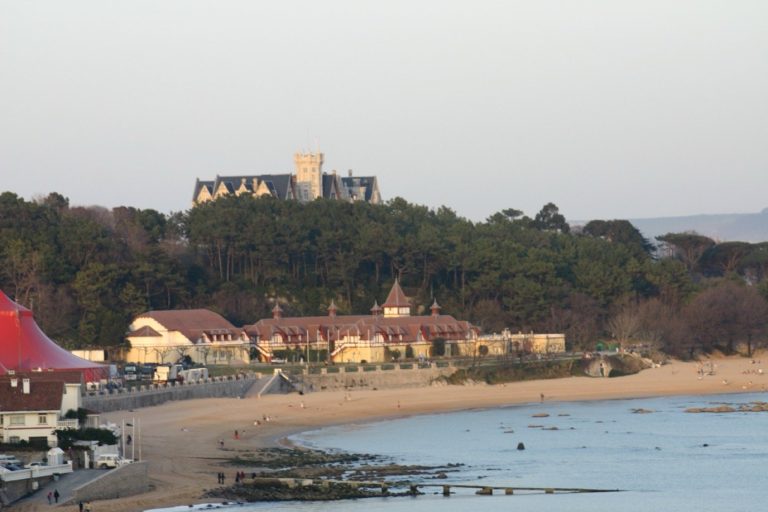
Capital of Cantabria, on a bay the route crosses by boat from Somo, €4 one way in autumn 2026; a common start for three weeks, 551.2 km from Santiago.
Photo: Diego Delso, CC BY-SA 3.0Santillana del Mar
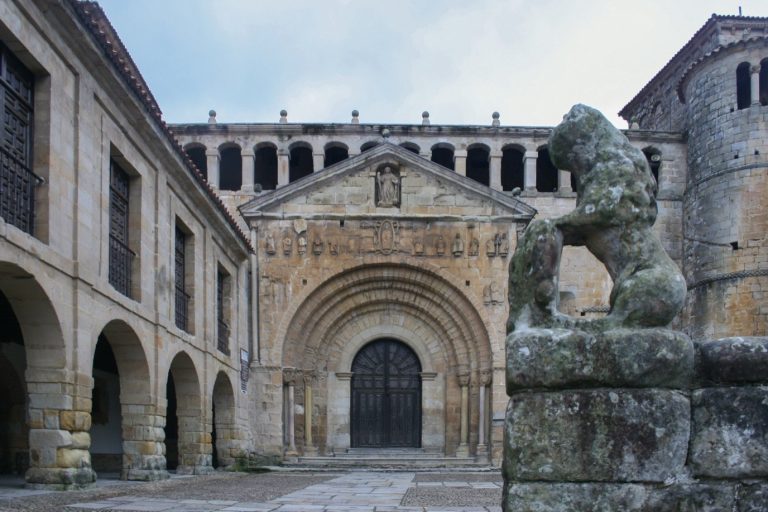
A medieval town with no saint, no plain and no sea, as the saying goes, around the Romanesque collegiate church of Santa Juliana of the 12th century and its cloister with 42 capitals; the cave of Altamira, World Heritage since 1985, is closed to the public, and its replica can be visited at the museum, half a kilometre away.
Photo: Wikimedia Commons, CC0Comillas
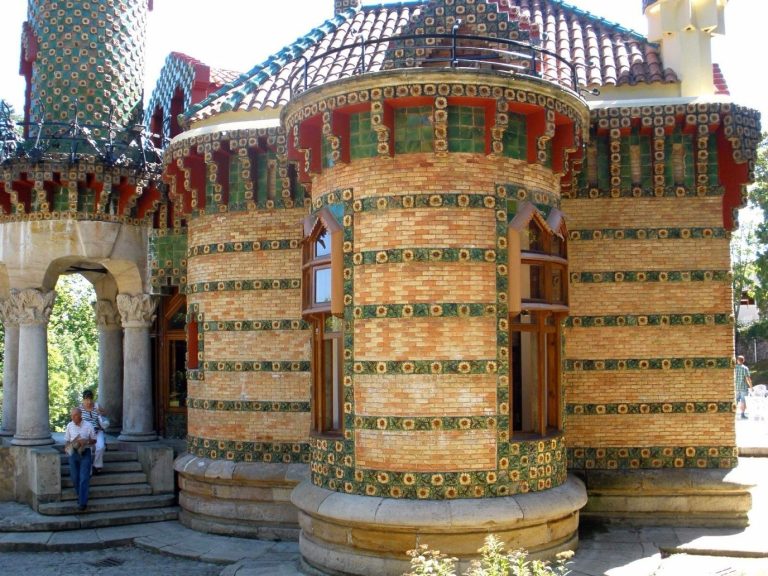
El Capricho, a villa by Antoni Gaudí built from 1883 to 1885 for a lawyer back from Cuba, a museum since 2010, next to the Sobrellano palace; the next stage enters Asturias.
Photo: Mentxuwiki, CC BY-SA 4.0Gijón
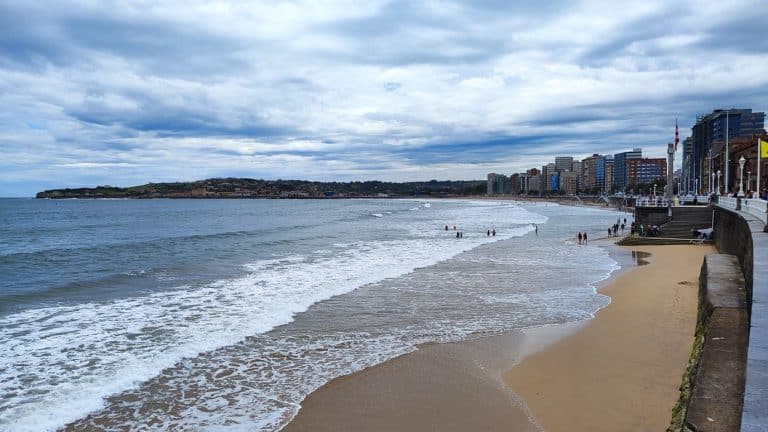
The largest city in Asturias, the fishermen’s quarter of Cimadevilla and Chillida’s Elogio del Horizonte, set in 1990 on the hill of Santa Catalina, the beach of San Lorenzo; one stage before, at Casquita, the route splits towards Oviedo and the Primitivo.
Photo: Certo Xornal, CC BY 2.0Ribadeo
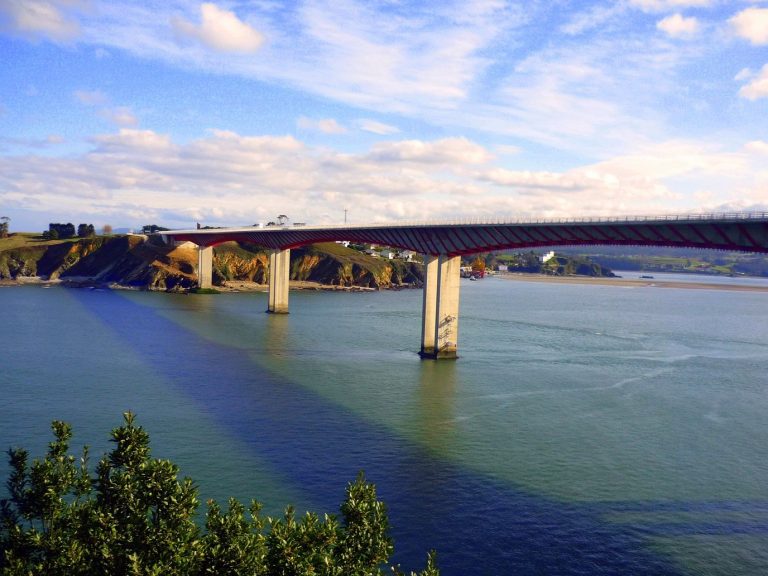
Entry into Galicia over the Ponte dos Santos, opened in 1987 across the ría of the Eo; the first Xunta albergue, at €10. The Praia das Catedrais, the Beach of the Cathedrals, with its arches of more than thirty metres, lies 10 km to the west, off the route, with regulated access in summer.
Photo: José Antonio Gil Martínez, CC BY 2.0Lourenzá
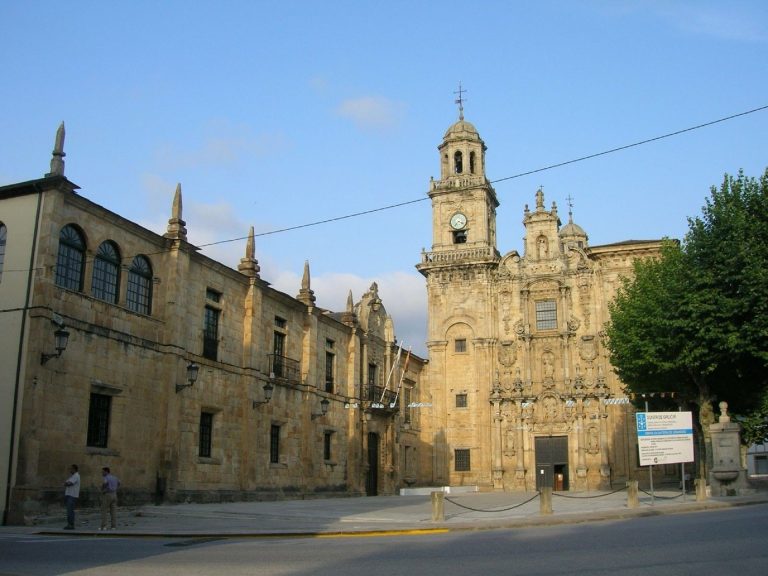
A valley stage around the Benedictine monastery of San Salvador, founded in the 10th century by Count Osorio Gutiérrez, whose façade was rebuilt in 1732 by Casas y Novoa; Mondoñedo follows, with its cathedral built from 1230 to 1248, an element of the UNESCO property, then the climb to Gontán, at 560 m.
Photo: One2, CC BY-SA 4.0Sobrado dos Monxes
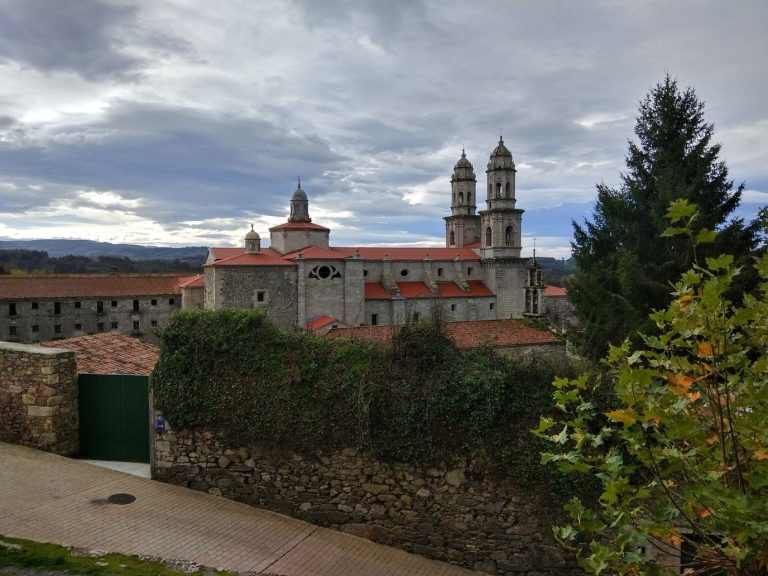
A monastery founded around 952, handed to the Cistercians in 1142 with a community from Clairvaux, church consecrated in 1708; the Trappists returned in 1966, and a pilgrim albergue of 120 beds is recorded in the village; an element of the UNESCO property, a little after the highest point of the route, at 707 m.
Photo: Simon Burchell, CC BY-SA 4.0Arzúa
Junction with the Camino Francés 38.6 km from Santiago; the last two stages, through O Pedrouzo and Monte do Gozo, are walked in the crowds of the last 100 km, with plenty of albergues.
Read more
Four monuments on the route, the church of Castro Urdiales, the collegiate church of Santillana del Mar, the cathedral of Mondoñedo and the monastery of Sobrado, are among the elements of the UNESCO property added in 2015; the Vizcaya Bridge has been listed in its own right since 2006.
To Oviedo, by boat or over the sierra: the Camino del Norte variants
The main fork comes at Casquita, a hamlet of Villaviciosa, by a chapel of San Blas: straight ahead, the coast and Gijón; to the left, the link to Oviedo, 38.7 km in two stages through Valdediós and Pola de Siero according to the Asturias tourist board, as far as the cathedral where the Camino Primitivo begins.
Boat crossings: checked on 25 October 2026
Los Reginas lists a €4 single fare for the Somo to Santander crossing and timetables in force from 26 October 2026 (losreginas.com). The Puntal boat between Laredo and Santoña sails for part of the year, from spring to autumn or thereabouts; out of season, take the Laredo to Santoña bus or the road through Colindres. The Pasaia motora is run by Itxaszerbi (turismopasaia.com). Check these services the day before: tides and weather shift them.
Read more
The two branches do not meet again before Galicia, at Melide and Arzúa: choose before you set off.
Three boat crossings are part of the route: the Pasaia motora before San Sebastián, which runs every day; the boat from Laredo to Santoña, in season, replaced in winter by the road through Colindres; and the launch from Somo to Santander.
Between Soto de Luiña and Cadavedo, the historic route climbs into the sierra de las Palancas, above 600 m without any services; most walkers take the camín real de las Ballotas along the cliffs, through Novellana and Castañeras, and the two meet again after Cadavedo.
Where to sleep on the Camino del Norte: albergues, prices and booking
The Camino del Norte has 562 places to stay recorded in OpenStreetMap within a kilometre of the track, against 843 on the shorter Camino Francés: density drops by more than a third and concentrates in the towns.
561 places to stay recorded along the route
- Private albergue3622,851 beds across 81 listings
- Hostal18376 beds across 5 listings
- Xunta albergue8922 beds across 8 listings
- Parish albergue5177 beds across 1 listing
- Municipal albergue360 beds across 2 listings
Accommodation recorded in OpenStreetMap: a guide to how much there is, not a complete list. Switch on the accommodation layer on the map to see where.
Find a bed in the stage towns
Affiliate map: if you book through it, the site earns a commission at no extra cost to you.
The map of hotels, guesthouses and apartments is provided by Stay22, which sets cookies once it loads.
To book or not
In the Basque Country and Cantabria, book the cities (San Sebastián, Bilbao, Santander) and summer weekends; in the villages, you will find a bed on arrival in most cases outside July and August. In western Asturias, between Soto de Luiña and Ribadeo, call the day before: one or two albergues per stage. In Galicia, the Xunta albergues are taken on arrival; from Arzúa, the pressure of the last 100 km of the Francés applies, above all in the 2027 Holy Year. Out of season, check opening dates: some municipal albergues close from December to March.
Read more
Public albergues work differently in each region: donativo in Irún, open in August alone in Gernika, municipal in Cantabria and Asturias at modest rates, €10 in La Caridad for instance, open from 1 April to 30 November; in Galicia, from Ribadeo onwards, the Xunta network charges €10 a night, no booking, one night per stage.
Private albergues with dormitories cost between €12 and €25; in San Sebastián and Bilbao, compare youth hostels and guesthouses, and book in summer. The stage table gives the number of places to stay recorded in OpenStreetMap at each arrival town; opening dates change with the season, so call before counting on one.
Getting to Irún, Bilbao or Santander, and back from Santiago
- Irún: via Hendaye. Regional TER trains from Bayonne reach Hendaye in 32 to 37 minutes, around twenty times a day, and the Euskotren Topo (line E2) links Hendaye to Irún and San Sebastián every half hour on weekdays.
Indicative times, check the timetables before you leave
The times above are indicative: they come from the operators’ pages (Euskotren, Lurraldebus, Aena, ALSA) and, in part, from secondary sources, read on 25 October 2026; confirm them with the operator before you leave. Euskotren is reorganising the Topo in 2026 with new underground stations in San Sebastián, and frequencies change with the season. Buy your tickets on sncf-connect.com, euskotren.eus, alsa.com and renfe.com.
Read more
San Sebastián airport is at Hondarribia, 2 km from the town and 22 km from San Sebastián: Lurraldebus line E28 passes through Irún, line E21 heads straight for San Sebastián. From Biarritz airport, Txik Txak buses reach Bayonne station in a quarter of an hour, then a TER to Hendaye.
Frequently asked questions
How many days does the Camino del Norte take?
Allow 34 stages for the 826.5 km (514 miles) from Irún to Santiago, that is five weeks with one or two rest days, in Bilbao or Santander for example. The breakdown averages 24.3 km a day; if you split the seven stages of more than 30 km, you reach 41 days of walking, six weeks with the rest days.
Is the Camino del Norte harder than the Camino Francés?
Close to 60 km longer and hillier: 14,398 m of cumulative elevation gain against 10,424 m on the Francés, without a single pass. The difficulty comes from the repetition of short climbs in the Basque Country, the long stages of Cantabria and Asturias, the rain and the mud, and albergues spaced further apart, which leave less freedom in the breakdown.
Where do you start the Camino del Norte to get the Compostela?
From Vilalba (120 km) or Baamonde (100.9 km on our track), with two stamps a day on the credencial. Baamonde leaves less than a kilometre of margin above the 100 km required: Vilalba, or Ribadeo for eight days of walking, leaves a safe margin at the Pilgrim’s Office. By bike, the rule rises to 200 km: Ribadeo, at 193 km, is not enough; start from La Caridad or Luarca.
Do you need to book albergues on the Camino del Norte?
In the cities and in August, yes: San Sebastián during the Semana Grande, Bilbao in late August, Santander and the Cantabrian beaches on summer weekends fill with tourists as much as with pilgrims. In western Asturias, where the stage table shows one or two places to stay at the arrival town, call the day before. In Galicia, the Xunta albergues are taken on arrival, no booking; the private ones from Arzúa to Santiago get booked up in summer.
What is the best time of year for the Camino del Norte?
From April to October, when the seasonal albergues are open: La Caridad from 1 April to 30 November, Miraz from 1 April to 31 October, Gernika in August alone; the Laredo boat sails in season. June and September avoid the beach crowds of August. The Cantabrian coast is wet in every season: on the 1971-2000 normals, San Sebastián receives 1,738 mm of rain a year and Santander 1,246 mm, with a peak from October to December; the waterproof jacket belongs in the pack whatever the month.
Camino del Norte or Camino Primitivo?
From Irún, the two share the coast as far as Villaviciosa; the question arises at Casquita. The Norte carries on through Gijón, Avilés and the Asturian coast, then inland Galicia, in some fifteen stages to Arzúa. The Primitivo, through Oviedo, Lugo and the Ruta de los Hospitales, is shorter (312 km from Oviedo), more mountainous (1,132 m at its highest) and joins the Francés at Melide.
Does the Camino del Norte follow the coast all the way?
In sections. The track follows or overlooks the shore on part of the Basque Country, Cantabria and Asturias, and elsewhere passes a valley or two inland; the way out of Bilbao towards Portugalete follows the industrial ría. From Ribadeo, it leaves the sea for good: the last 193 km cross inland Galicia.
Camino Primitivo, Camino Francés and the Camino guide: related pages
The Camino Primitivo leaves the Norte at Casquita for Oviedo, crosses the mountains of Asturias and Lugo, and joins the Francés at Melide: the mountain alternative for the second half.
Photo: José Antonio Gil Martínez from Vigo, Spain, CC BY 2.0Camino Primitivo
from Oviedo
Photo: MartinD, CC BY-SA 3.0Camino Francés
from Saint-Jean-Pied-de-Port
Photo: Simon Burchell, CC BY-SA 4.0Compare the routes
Camino de Santiago guide
Read more
The Camino Francés shares its last two stages with the Norte, from Arzúa to Santiago. The Camino Portugués, from Lisbon, Porto or Tui, is less hilly; its main track runs inland, and its Coastal Route follows the Atlantic. For the Compostela, the budget, the season and the packing list, the Camino de Santiago guide gathers the facts shared by all the routes.
Sources and checks
52 sources
- Wikipedia ES (UNESCO property 669, relaying whc.unesco.org, which returns 403) checked on October 25, 2026
- SNCF Connect (July 2026 timetables, read via web search) checked on October 25, 2026
- Wikipedia EN (Topo, Euskotren) checked on October 25, 2026
- Basque Government, airports factsheet (January 2024); spain.info checked on October 25, 2026
- Biarritz Pays Basque airport (bus access page) checked on October 25, 2026
- Aena (Bilbao airport, buses) checked on October 25, 2026
- Secondary guide (Nomado); orain.eus (2018); felicesvacaciones blog checked on October 25, 2026
- ALSA (Irun to Santiago de Compostela page) checked on October 25, 2026
- ALSA (Santiago bus station); Omio checked on October 25, 2026
- Los Reginas (Santander bay launches) checked on October 25, 2026
- caminodesantiago.me forum (2026); alberguescaminosantiago.com (Laredo to Güemes stage); Wise Pilgrim (El Puntal, spot check) checked on October 25, 2026
- Turismo Vasco (Pasaia motora); marielaaroundtheworld.com checked on October 25, 2026
- Turismo Asturias (Coast to Primitivo link, official regional source) checked on October 25, 2026
- Gronze (spot check, no extraction) checked on October 25, 2026
- Pilgrim.es (Soto de Luiña to Cadavedo stage); Turismo Asturias (Soto de Luiña to Villademoros stage); Gronze (spot check) checked on October 25, 2026
- Pilgrim.es (Camino del Norte stage list) checked on October 25, 2026
- Viaje Camino de Santiago (Camino del Norte, stages and starting points) checked on October 25, 2026
- Albergues Camino Santiago (Ribadesella to Sebrayo and Lourenzá to Gontán stages, 2026 updates) checked on October 25, 2026
- Albergues Camino Santiago (La Caridad listing, updated 20 August 2026; Norte albergue guide, 11 August 2026) checked on October 25, 2026
- Xunta de Galicia, official website of the Camino in Galicia checked on October 25, 2026
- San Sebastián Turismoa (tourist office, Semana Grande page); euskadi.eus (events calendar); Wikipedia EN (Aste Nagusia, Bilbao) checked on October 25, 2026
- Wikipedia ES (Basque Coast Geopark) checked on October 25, 2026
- Wikipedia ES (Gernika-Lumo) checked on October 25, 2026
- Wikipedia ES (collegiate church of Zenarruza / Ziortza) checked on October 25, 2026
- Wikipedia ES (Guggenheim Bilbao) checked on October 25, 2026
- Wikipedia ES (Vizcaya Bridge) checked on October 25, 2026
- Wikipedia ES (Santillana del Mar) checked on October 25, 2026
- Wikipedia ES (El Capricho) checked on October 25, 2026
- Wikipedia ES (Gijón) checked on October 25, 2026
- Turismo Asturias (ría of the Eo); Gronze and Pilgrim.es (spot check) checked on October 25, 2026
- Wikipedia ES (Praia das Catedrais) checked on October 25, 2026
- Wikipedia ES (Mondoñedo) checked on October 25, 2026
- Wikipedia ES (monastery of Sobrado) checked on October 25, 2026
- Turismo Asturias (San Salvador de Priesca) checked on October 25, 2026
- Spanish Ministry of Agriculture, 2012 statistical yearbook (AEMET 1971-2000 normals); Basque Government 2023 weather report checked on October 25, 2026
- Oficina del Peregrino checked on October 25, 2026
- Suisse Rando (walking time calculation method) checked on October 25, 2026
- Albergues Camino Santiago (San Martín albergue listing, Miraz, updated 21 August 2026); csj.org.uk checked on October 25, 2026
- Wikipedia ES (castle of Santa Ana) checked on October 25, 2026
- Wikipedia ES (Casco Viejo, Bilbao) checked on October 25, 2026
- Wikipedia ES (Jaizkibel) checked on October 25, 2026
- Spain.info (Turespaña, monastery of San Salvador de Vilanova de Lourenzá) checked on October 25, 2026
- Wikipedia ES (Santander, Bilbao-Abando and Donostia/San Sebastián stations) checked on October 25, 2026
- Wikipedia ES (Avilés and Gijón-Sanz Crespo stations) checked on October 25, 2026
- Copernicus EU-DEM
- OpenStreetMap contributors (ODbL 1.0)
- UNESCO
- Wikidata (CC0 1.0)
- alberguescaminosantiago.com
- pilgrim.es
- santiago.es
- viajecaminodesantiago.com